As display technology, gaming platforms, professional AV systems, and immersive entertainment continue to evolve, the demand for greater bandwidth has never been higher. The HDMI® 2.2 Specification is the latest evolution of HDMI Technology, delivering the performance needed for the next generation of consumer electronics while supporting increasingly sophisticated content creation, distribution, and entertainment experiences.
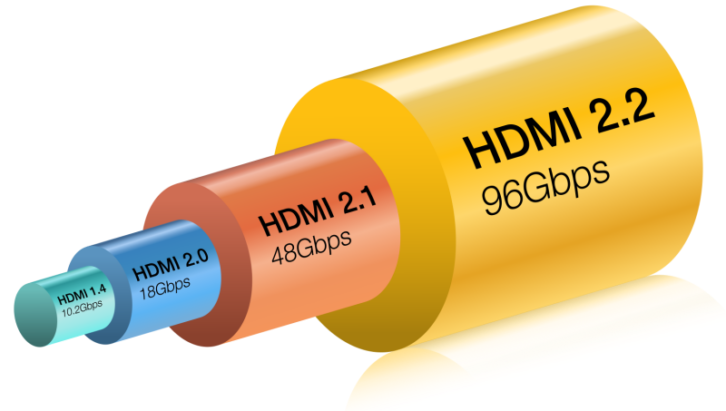
With support for up to 96 Gbps of bandwidth through next-generation Fixed Rate Link (FRL) technology, the HDMI 2.2 Specification doubles the maximum bandwidth of previous HDMI Specifications. This enables support for higher resolutions and refresh rates, including 12K at 120 Hz and 16K at 60 Hz, while also supporting demanding uncompressed formats such as 8K at 60 Hz and 4K at 240 Hz with full 4:4:4 chroma and 10-bit or 12-bit color.
The Importance of Color Bit Depth and Bandwidth
While higher resolutions and refresh rates often receive the most attention, color bit depth plays an equally important role in overall image quality. Bit depth — commonly referred to as color depth — determines how many shades of red, green, and blue can be displayed for every pixel on the screen.
An 8-bit image provides 256 shades for each primary color, producing approximately 16.7 million colors. This has long been the standard for traditional video. A 10-bit image increases that to 1024 shades per color channel, producing more than one billion colors, while 12-bit color delivers 4096 shades per channel for an incredible 68 billion possible colors.
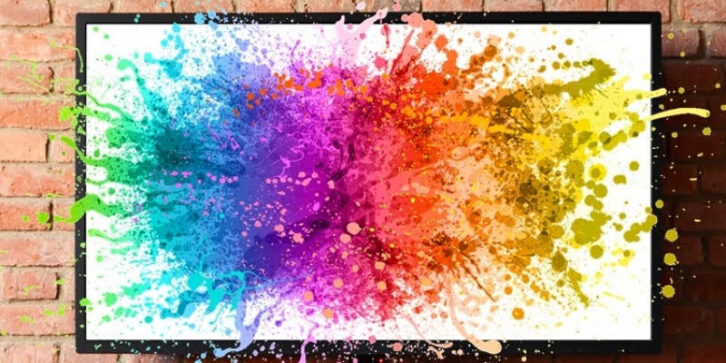
The additional color precision produces smoother gradients and more natural-looking images by reducing visible color banding — the harsh transitions sometimes seen in skies, sunsets, shadows, and other subtle color changes. This is especially important for High Dynamic Range (HDR) video, where greater brightness, contrast, and wider color gamuts demand more precise color reproduction. In fact, the ITU-R BT.2020 standard specifies 10-bit color as the minimum requirement for UHD HDR content.
Higher color quality also requires more bandwidth. Because 10-bit color carries approximately 25% more data per pixel than 8-bit color, the HDMI signal must transport significantly more information. When high resolutions, fast refresh rates, HDR, and full 4:4:4 chroma sampling are combined, bandwidth demands increase dramatically, and systems may automatically reduce refresh rates or lower color detail to fit within the available data rate. The expanded 96 Gbps bandwidth helps eliminate these compromises, allowing compatible HDMI 2.2 products to deliver higher resolutions, faster refresh rates, richer color, full chroma sampling, and more accurate HDR performance simultaneously.
Ultra96 HDMI® Cable
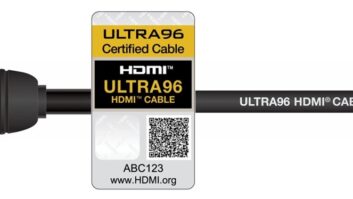
To support these higher bandwidths, the HDMI Forum introduced the Ultra96 HDMI Cable. Designed for up to 96 Gbps, Ultra96 HDMI Cables support all HDMI 2.2 features, including official certification through the Ultra HDMI® Cable Certification Program. Existing Ultra High Speed HDMI® Cables continue to support systems requiring up to 48Gbps.
Ultra96 Feature Name
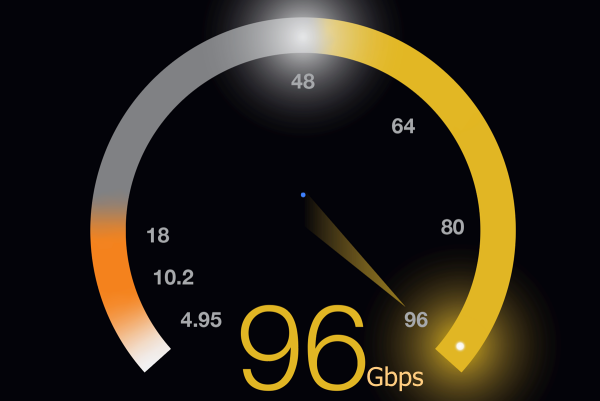
The Ultra96 Feature Name helps identify products supporting maximum bandwidths of 64 Gbps, 80 Gbps, or 96 Gbps in accordance with the HDMI 2.2 Specification. Consumers may see the Ultra96 designation on packaging, specification sheets, HDMI ports, or product menus, making it easier to identify products designed for the highest-performance HDMI connections.
Latency Indication Protocol (LIP)
The HDMI 2.2 Specification also introduces the Latency Indication Protocol (LIP), which allows connected HDMI devices to automatically exchange latency information, improving audio and video synchronization throughout the system, even in complex entertainment systems with multiple connected devices.
More Gaming, More Movies, More Sound
The HDMI 2.2 Specification continues to support advanced gaming features including Variable Refresh Rate (VRR), Auto Low Latency Mode (ALLM), and Quick Frame Transport (QFT). Support for Dynamic HDR optimizes picture quality scene by scene, while Enhanced Audio Return Channel (eARC) supports the highest-quality immersive audio formats. Quick Media Switching (QMS) further enhances the viewing experience by eliminating the temporary blank screen that can occur when switching between video frame rates.
Related: Next-Gen HDMI Technology Crucial for Advanced Gaming
The HDMI 2.2 Specification provides the bandwidth, image quality, and future-ready connectivity needed to experience today’s content — and tomorrow’s innovations — at their very best.
For more information, visit www.hdmi.org.
The terms HDMI, HDMI High-Definition Multimedia Interface, HDMI Trade Dress and the HDMI Logos are trademarks or registered trademarks of HDMI Licensing Administrator, Inc.