Tales of a “silver tsunami” have been circulating the industry for years, with people living longer and expressing a desire to stay in their homes for as long as possible. The non-marketing-friendly term “aging in place” has been floating throughout custom installation as a field to watch and an opportunity waiting to be realized.
But what does that look like? What kind of training or additional services do integrators need to offer to participate?
For answers to those questions and more, we look to the retirement capital of the United States — Florida — and one of its key technology players, Boca Tech and Automation, located in the senior haven of Boca Raton. Boca is one of the few integration firms with Certified Aging-in-Place Specialists (CAPS) on staff. Presented by the National Association of Home Builders (NAHB), CAPS “teaches the technical, business management, and customer service skills essential to competing in the fastest growing segment of the residential remodeling industry: home modifications for the aging-in-place.”
What’s in a Name?
If you think “aging in place” is not a great name to incentivize a sale, you are not alone. “Living freely” is an alternative Jeff Galea, president and CEO at Boca Tech and Automation, uses when talking to clients.
“One of the first lessons we had when we were doing the CAPS training is that aging in place is not for when you are old,” explains Marcio Gomes, marketing director for Boca. “You need to think about adapting the house even if you are not an old person. If we use the name ‘aging in place,’ you’re going to be setting us up for failure. Our concept of aging in place is not just related to safety; it is about comfort and anticipating your and your family’s future needs.”
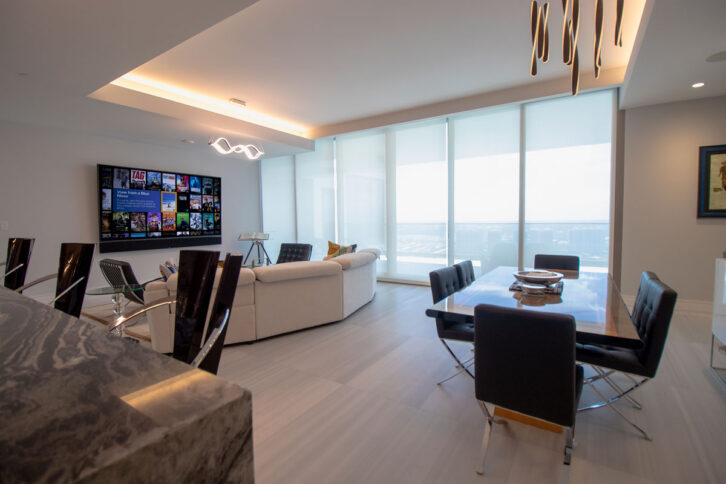
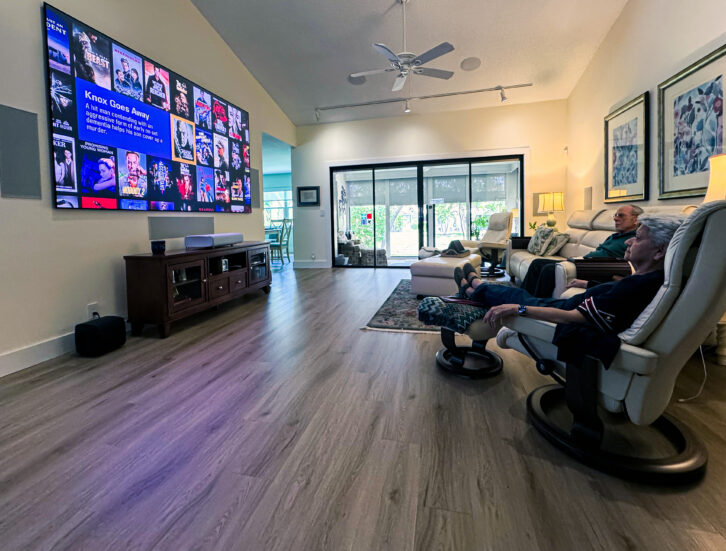
“When you hear those words, your tendency is, ‘This is about me growing old and not being able to take care of myself, right?’” says Galea. “But as Marcio said, there’s the other half of this. I might put a ramp in my own house because I want my parents to visit me. And it works the other way, too. Marcio and I share the same parents — my mom and dad are his mother- and father-in-law. So, his son goes over and watches TV with them on their UST projector. If they had a small TV without Dolby Atmos, I doubt he’d be as interested.
“One of the things CAPS told us about aging in place is about making your house accessible to visitors, whether that’s us as younger adults bringing aging people in and having accommodations, or the other way around, like when my grandkids come over and I know they are going to want to play Xbox. It is about being aware of everybody’s needs, whether they themselves have the health issue or someone in their family might have a health issue at any age. The training made us aware of all of the other things that go on.”
The Evolving Home
When viewed through the CAPS lens, aging in place is not a specific set of technologies, but an awareness of the continued evolution of the home. Throughout our lives, our homes change as nurseries become kids’ rooms, then guest rooms, offices, studies, or craft rooms. Aging in place is asking for a more proactive approach to the home’s evolution.
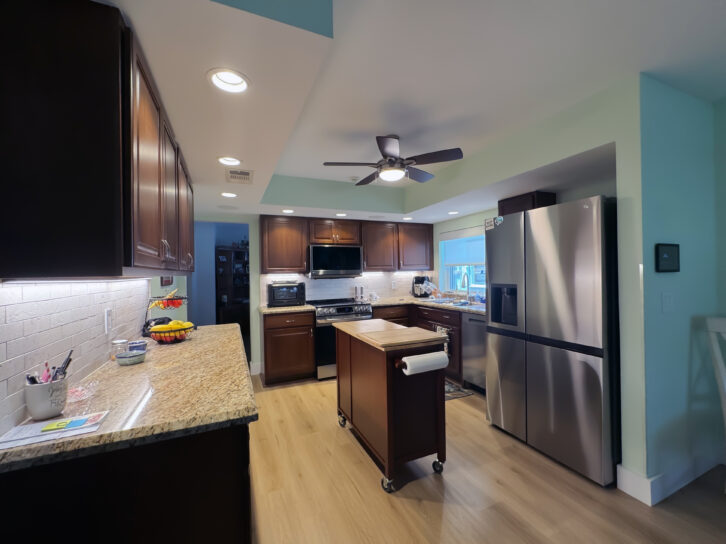
“I first thought CAPS is a category — let’s put everything in a box and sell it that way,” says Galea. “Then you realize it’s the same stuff we’ve been doing anyway, just with a different purpose. Our categories are the same, but the justifications for the tech become more ‘needs’ than ‘wants.’”
For Boca, aging in place is not about putting in health and fall sensors. If a sensor fails, that is not something the firm wants to be responsible for. “One thing that we’re not doing, and I don’t have plans to do it,” says Galea, “would be for me to become your medical provider.” [Although there are services for that — see the Global Wave Integration sidebar below, entitled “How Integrators Are Redefining Care-Enabled Living,” for more information.]
But the tools they currently offer can provide homeowners — and, if they choose, caregivers — peace of mind. “We do a lot of lighting sensors and occupancy sensors,” says Galea. “Those are very useful, and we have circled back and done more motorized shades after the client said they weren’t interested at first.
Related: Banking on Boca Tech
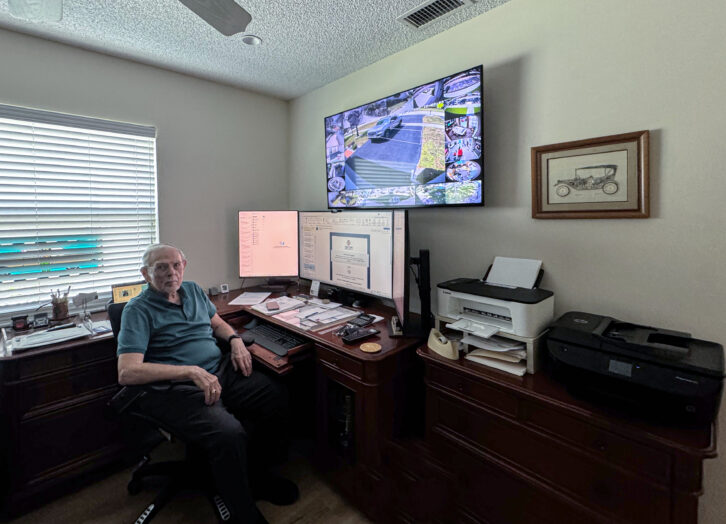
“From a security perspective, we need to take that category very seriously in an aging-in-place situation. The whole idea of using AI cameras and monitoring who’s coming and going is very popular with seniors. Everybody wants situational awareness — especially when you’re sitting alone in your house. It’s very comforting.
“When I’m talking to a client that is in this CAPS category, and they say they don’t really need that many cameras, I give them real-world use cases, and usually it makes sense to them. This isn’t just monitoring my exits and entrances; it’s seeing what package just got delivered or if the mailman came and it’s worth a walk to the mailbox or not. My dad does that — he doesn’t go out there until he knows there is something to get.
“The other side of that, which was covered in CAPS, would be if there’s an adult contact in your world that you want to grant access to your cameras so they can check on you. It’s important for clients with multiple homes and also clients with adult children keeping track of them.”
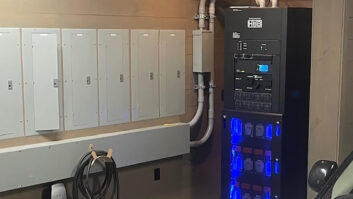
Power is another staple in the CAPS world. While an uninterruptible power supply system is an expensive addition to a home, if you have life-saving equipment that needs power at all times, it becomes a necessity. [See sidebar below entitled “Why Reliable Energy Infrastructure Is Critical for Aging-in-Place Homes” for more information.]
Lighting also plays a part in this category, a lesson Galea experienced firsthand with his parents’ home. “After we had everything installed and they lived with it for a year or so, there were reports coming back from my sister that my mom wasn’t sleeping well and wasn’t engaged,” he says.
“This was around the time that the natural scenes were coming out with Lutron. Even though we had full lighting control, we went back into their main areas and added more lighting fixtures into their ceiling. Then we put Ketra in and added a natural show. Now the lights follow the sun just like our showroom does. And the report that we got back was that it did help the health and well-being of my mom in particular.
“I would say in retrospect that I would go forward with natural lighting now that it’s readily available; it’s something we can do, and we know how it works. I have a before and after with my own parents of what good quality light does in terms of how you feel and how active you are during the day.”
The Living Freely Lifestyle
Aging in place, pardon…living freely is a hot topic in the markets that Boca serves, with the firm attracting new clients as well as continuing to service their current clientele as life goes on. While it is important to let people know these programs exist, marketing them in an appealing way can be difficult.
“It is a whole new market in this industry,” says Gomes. “When we were CAPS certified, I thought we should promote it with a blog and put a section about it on our website. Jeff was more interested in letting it happen naturally. So, when you have a conversation with a client, you have your mindset prepared to approach that concept without using the words that make them not want to talk about it. We have a conversation with the clients naturally, and they will surely speak of some things that we can help them with — like power, for example.
“Working with this demographic here in South Florida, a bunch of our clients are older. Our customer service speaks their language and also, when we’re writing our marketing programs, we suit our language more toward the older crowd. We do the same when we answer the phone here. If you want to work with this demographic, you need to speak in their language, be patient and explain things better”.
“There’s nothing saying that everybody that’s aging in place needs to set up a hospital room in their master bedroom,” concludes Galea. “That applies to some people and those projects we can do a certain way. But the people we’ve been working with are otherwise healthy. They’re just older.”
For more information, visit bocatech.com.
Why Reliable Energy Infrastructure Is Critical for Aging-in-Place Homes
By Joe Piccirilli, CEO and founder, RoseWater Energy
As demand for aging-in-place solutions grows and more consumers look to create “forever homes,” systems integrators are being challenged to design environments that deliver more than convenience and comfort. Today’s smart homes must actively support safety, health, and independence over time. While much of the focus is placed on connected devices and automation platforms as part of an aging-in-place strategy, one foundational element underpins it all: stable, reliable power.
Specifying, designing, and installing technology to fully support aging in place requires a long-term perspective. People are living at home longer, often more independently, and, in many cases, managing the same large homes in which they’ve raised their families. The systems already in place and those installed later must continually adapt to evolving needs without adding complexity or requiring constant intervention.
At the heart of these adaptable environments is an expanding network of sensors and connected technologies, including motion detectors, health monitoring devices, surveillance cameras, and voice-controlled systems. These microprocessor-driven technologies continuously monitor activity, detect anomalies, and trigger alerts that can indicate a fall, a missed routine, or a developing health issue. Their reliability is critical; even a brief disruption caused by a power glitch can compromise their effectiveness and, ultimately, the well-being of the occupant.
This shift is accelerating as homes increasingly serve as platforms for self-care. Remote diagnostics, virtual doctor visits, and ongoing health monitoring are becoming standard components of aging-in-place environments. Communication tools now connect homeowners with caregivers, family members, and medical professionals in real time. In this context, system reliability is not simply a performance metric; it is essential to maintaining continuity of care.
The broader ecosystem further reinforces this need. Voice control enables individuals with limited mobility to interact with their environment. Video surveillance allows remote check-ins for peace of mind. Smart appliances deliver alerts when something goes wrong. Together, these systems create a support network that enables independence but only if they remain consistently operational. Outages, reboots, and troubleshooting are out of the question.
Beyond safety and monitoring, power stability also directly impacts quality of life. Modern aging-in-place environments often include wellness-driven technologies such as advanced HVAC systems, air quality monitoring, automated shading, and powered furniture like adjustable beds. These systems work in concert to create a comfortable, responsive living environment, but their performance depends entirely on uninterrupted power.
For integrators, these scenarios underscore the need to rethink how power is approached in residential design. It is no longer just infrastructure in the background but rather an integral part of a user’s safety, health, and well-being as they age.
As a result, a comprehensive power management strategy, encompassing standby power, surge protection, power conditioning, and continuous system monitoring, must be treated as a foundational requirement for any aging-in-place project. Without a deliberate power plan in place, even the most advanced technologies become unreliable, undermining the very systems designed to protect and support the homeowner.
For integrators, this is not an add-on or afterthought; it is the backbone of the entire platform. As homes take on a greater role in supporting health, safety, and independence, the success of the entire aging-in-place ecosystem ultimately depends on one thing: a stable, reliable power foundation.
For more information, visit rosewaterenergy.com.
How Integrators Are Redefining Care-Enabled Living
By Kyle Steele, Global Wave Integration and FutureCare Solutions Group
There’s a moment in almost every project when the conversation changes. The client stops talking about speaker placement or lighting scenes. They pause for a second, then ask something more personal:
“What happens when my parents can’t live alone anymore?”
“What happens when I can’t?”
I’ve had that conversation more times than I can count. Every time, I’m reminded that the most meaningful technology we install usually isn’t the thing that impresses guests at a dinner party; it’s the technology that helps families stay together in the homes they love for as long as possible, while preserving comfort, independence, and dignity.
That conversation is becoming more common, and one of the biggest opportunities in residential integration. It’s already sitting inside the client relationships many integrators have today.
According to AARP, 75% of adults over 50 want to remain in their homes as they age. By 2040, the population over 65 is expected to nearly double to 80 million people. These are our clients. Their parents. Their future.
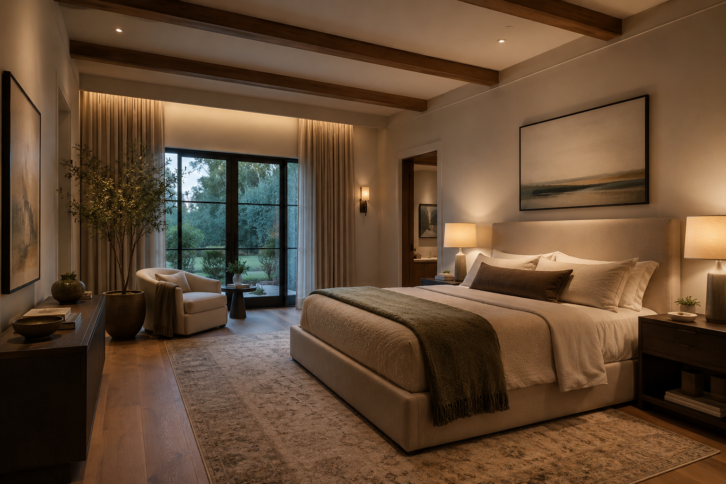
Today, the care-enabled living conversation centers on two environments. The first is the care-enabled suite, designed for someone who wants to remain independent longer. Circadian lighting that supports natural rhythms throughout the day. Motorized shades. Voice control. Passive wellness monitoring that gives families peace of mind without making the person living there feel watched. That balance between support and discretion is where thoughtful design matters most.
The second is what we call the End-of-Life (EOL) room, and this is where many integrators still underestimate what’s possible.
The EOL Room: Not a Bedroom With Better Speakers
The end-of-life environment Global Wave Integration has spent years developing is not a hospital room with nicer furniture. It is an adaptive multisensory system, a unified platform that integrates lighting, audio, spatial sound, visual projection, air quality, scent diffusion, and environmental sensing into a continuous, AI-driven feedback loop.
What makes it genuinely different is the concept of experiential modes. A caregiver or family member opens a wellness app and selects an environment, not a scene: calm, comfort, dawn, dusk, and a legacy video experience.
Each mode is a curated combination of lighting intensity and color temperature, audio output and spatial sound field, visual projection content, and airflow and temperature, all calibrated to support a specific emotional or therapeutic outcome.
A Legacy Video Experience fills the room with meaningful family media, softened lighting, and spatial audio tuned to a particular emotional register. Dawn brings a gentle, circadian-appropriate brightening paired with ambient sound that eases someone into the morning without jarring them awake.
These are not static presets. The environment continuously adjusts in the background as conditions change, whether that’s air quality, room temperature, or movement patterns. At the same time, the individual always stays in control of their own space. Nothing changes without consent.
The Care-Enabled Suite: Passive Monitoring as the Foundation
For clients supporting a parent who wants to stay home independently, not yet at end-of-life, but at a stage where peace of mind matters, the integration opportunity centers on passive, sensor-based wellness monitoring. This is the core of what FutureCare Solutions Group deploys. No cameras. No microphones. No wearables. Just discreet environmental sensors that establish behavioral baselines: motion patterns, sleep quality, bathroom activity, kitchen use, and subtle anomalies, before they become crises.
Families receive visibility and peace of mind. Older adults maintain their privacy and independence. The system integrates naturally into existing smart home infrastructure. For integrators already specifying lighting and automation in a household, it’s a logical, high-value add-on. For new construction or renovation projects, combining FutureCare’s monitoring layer with whole-home automation, circadian lighting, and voice control creates a premium care-enabled package that speaks directly to what clients actually want: peace of mind, and the ability to keep their family together.
What Integrators Actually Need
The barrier to entry is not technical. Most integrators already have the core skills. You have hardware relationships. You have networking competence. You have client trust. What most integrators lack is a care-technology partner who can supply the monitoring platform, the product training, and the industry context to have this conversation with confidence.
Global Wave Integration spent years building exactly that delivery model. Through our partnership with FutureCare Solutions Group, we offer a subcontract and referral path for integrators who want to bring care-enabled and EOL room capabilities to their clients, without having to build the internal bandwidth or product portfolio from scratch.
GWI handles spatial design, hardware integration, and automation engineering. FutureCare layers in the passive health monitoring and family connectivity platform. The result is a whole-home care solution that clients can understand, trust, and actually use.
A Room Worth Designing
The families who have experienced these environments don’t describe them as technology. They describe them as gifts. A daughter who can check on her mother without calling three times a day. A father who gets to stay in his own bedroom, in his own home, surrounded by the things that matter to him, with a system quietly making sure he’s okay.
That’s what care-enabled living really means. Not a feature set. Not another product category. A promise to the people we serve that the home will take care of them, the way they’ve always taken care of everyone else.
The skills required are the same ones you’ve been building your entire career: understanding what a client actually needs, translating it into technology, and executing with precision. The difference is that the stakes are higher, and the gratitude runs deeper than anything a flat panel installation has ever produced.
For more information, visit globalwaveintegration.com.