Nearly everyone in custom integration says the same thing: We need to get in earlier. Early and often. Earlier in the process. Earlier with the architect. Earlier with the builder. Earlier with the designer.
Fine. Great. Lovely sentiment. But at design/build events, builder shows, kitchen and bath gatherings, designer forums, and all the places where those relationships are actually formed and reinforced, and the integration community is, more often than not, conspicuously absent. Or worse: present, but not useful.
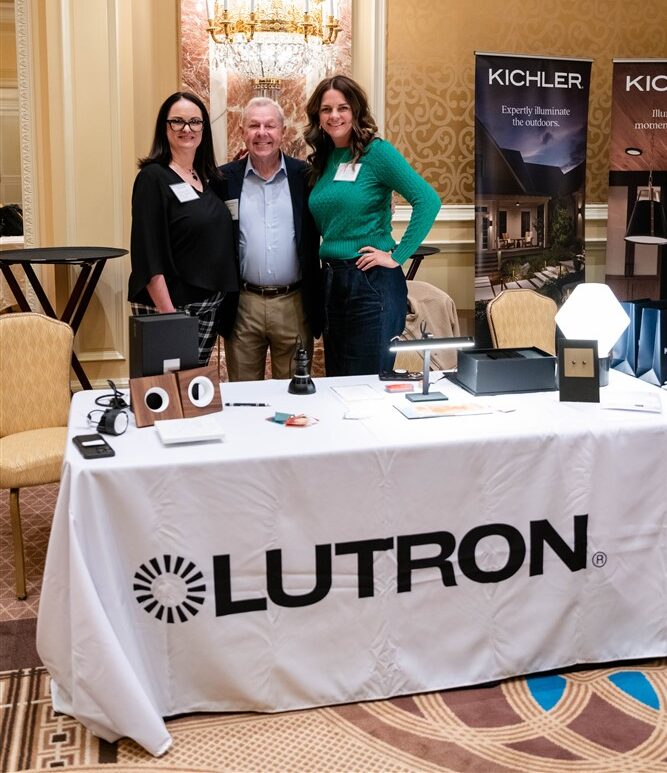
That is the disconnect we do not talk about enough.
Many people in the design/build community still do not fully understand what an integrator is, what the role should be, or why they should bring one in early, let alone often. They are not sitting around waiting for us to bless their projects with our presence. Many of them have experienced the technology trade at large as reactive, self-interested, or narrowly focused. They do not hear, “We’re here to help you.” Too often, what they hear is, “We want in.”
That distinction matters.
If all they hear from our side is we want in, we want in, we want in, without any meaningful proof that we can make their projects better, smoother, safer, more beautiful, or more profitable, then why exactly would they let us in?
Trust is not granted because we say the phrase “early and often” enough times. Trust is earned because we consistently show up, add value, and make ourselves useful long before there is a purchase order attached.
Also by Katye McGregor Bennett: The Difference Between Being Included and Being Recommended
And that is where a lot of integrators lose the plot. Some show up expecting instant access. Some want the relationship without the relationship-building. Some want the builder, architect, or designer delivered to them like a qualified lead. Some think a single lunch, a one-off CEU, a showroom event, or a slick ad is somehow enough to earn long-term relevance. It is not.
You are another trade. That is not an insult. It is simply reality. And like every other trade, you have to be vetted. You have to prove that you understand the flow of a project. You have to show that you respect the design intent. You have to demonstrate that your presence is going to reduce friction, not create more of it.
The irony, of course, is that the integration community IS incredibly valuable to the design/build world now, more than ever. There are so many legitimate touchpoints. So many ways in. So many pain points we are uniquely qualified to solve. And yet we routinely under-serve the exact categories where our value should be the clearest.
Take design-sensitive projects. Hidden technology. Trimless lighting details. Invisible speakers. Motorized lifts. Complex control in highly finished spaces. Coordination-heavy environments where aesthetics matter just as much as performance. Too many integrators avoid these jobs, not because they cannot do them, but because they require more meetings, more coordination, more collaboration with millworkers, cabinet shops, designers, lighting teams, and builders. In other words: more effort, and some have decided that if the work is harder, it is somehow less desirable.
That is backward. The hard work is often the moat. The projects that require more coordination are often the exact projects that make you more valuable to the design/build community, because they reveal whether you are a box mover or a real problem solver. If you are the one who can walk into a complicated space and say, “Yes, we can make that work, and here is how,” you become memorable in the right way. If your response comes across as, “That sounds a lot of coordination,” you have just told the room exactly how small your ambition is.
The same thing is happening in categories like aging in place, living in place, and end-of-life support technology. Interior designers are increasingly working on projects where wellness, safety, accessibility, and adaptability matter deeply. And still, there are corners of our industry that treat those opportunities as if they are outside the lane.
Also by Katye McGregor Bennett: How Multi-Trade Events Can Deliver Real Value
That is a mistake. If the project involves systems, interfaces, automation, sound, acoustical treatment, environmental control, communication, monitoring, or quality-of-life outcomes inside the home, that is our lane. Or at the very least, it should be.
So what does showing up the right way actually look like?
It looks like attending their events, not just ours. It looks like creating compelling talks, demos, and CEUs that solve real problems for designers and builders instead of turning into product pitches with bad lighting and worse snacks. It looks like following up after the event with an email, a coffee, a thoughtful introduction, or an idea that is relevant to the kind of work they do. It looks like listening more than talking. It looks like bringing proactive ideas before being asked.
Most of all, it looks like measuring success differently, not by how many cards you collected. Not by how many people walked your booth. Not by whether someone nodded politely while you explained your company for the fifth time that day. Measure success by this: How often does someone from the design/build community call you and say, What do you think about this?
That is the real metric, because once they start calling for your opinion, you are in the circle. And if they are not calling, you are probably not.
That sounds sharp because it is. But it is also fixable. Not every integrator needs to become a networking machine. Not every owner is wired to work a room, initiate relationships, and turn designer conversations into long-term business. Fine — then hire or develop someone who is.
If you are not showing up consistently, building trust intentionally, and adding value proactively, someone else will. In some cases, they already are.
So here is the challenge: pick one measurable step to deepen your design/build relationships in the next 90 days.
- Attend one non-CI event.
- Schedule three in-person meetings with design/build professionals.
- Develop one useful CEU.
- Invite a trade professional to walk an active project with you.
- Follow up with five people you already met but did nothing with.
- Do something real to effectively move a trade professional relationship forward.
And I’ll add one more. Commit to attending the International Builders Show/KBIS in 2027. Do more than just go. Submit to speak. Reach out to brands ahead of time that you see in the same projects as yours to learn more about what they do. Go to the booth. Get scanned, actively listen to their pitches. Share relevant anecdotes and ideas, and be sure to follow up afterward. Become more memorable. Because “early and often” is not a strategy if you never show up.
Need more help getting this off-center? That’s my specialty. Drop me a line at [email protected] to start that conversation.