Gaming now ranks among the toughest tests any AV system faces. Television makers have put advanced HDMI® gaming capabilities at the center of their product launches, and that message is reaching everyone from occasional players to dedicated competitors. The result is a more informed customer who expects flawless performance, and it falls to the system integrator to deliver it. The HDMI® 2.2 Specification provides the foundation for systems that meet those expectations today while leaving room for what comes next.

Demand Is Building on Every Front
Interest in high-performance gaming spans the entire industry. Game studios, network and connectivity providers, hardware manufacturers, and integration firms are all invested in its growth. On the commercial side, eSports is a major driver. Colleges and universities are launching competitive programs and constructing dedicated arenas, and new tournament venues continue to appear around the world. Each project involves multiple displays, player stations, and audio zones that depend on reliable, high-bandwidth connections, and a substantial and growing line of business for integrators.
The Performance Behind HDMI 2.2 Technology
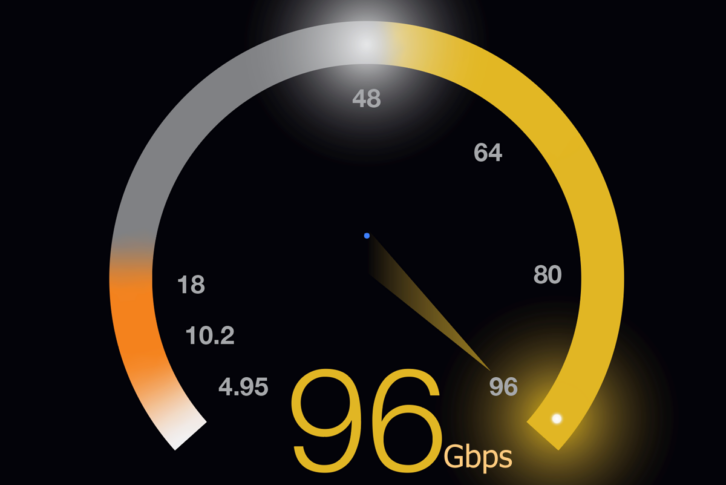
At the heart of the HDMI 2.2 Specification is a jump in bandwidth to 96Gbps, twice the capacity of the previous generation, made possible by next-generation HDMI Fixed Rate Link technology. That capacity opens the door to the best future gaming and entertainment experiences.
In the future, players will notice the difference in higher resolutions and refresh rates, with support for 4K at up to 480 Hz, 8K at up to 240 Hz, and resolutions reaching 10K. Image quality also benefits from a higher color bit range, including uncompressed 4:4:4 formats such as 4K@240 and 8K@60 at 10-bit and 12-bit depth. The result is cleaner gradients, more striking HDR, and finer detail for more immersive gameplay.
The gaming features players already know continue to anchor any HDMI 2.2 technology system:
- Variable Refresh Rate (VRR) keeps the display in step with the frame rate coming from the console or PC, reducing lag, judder, and tearing.
- Auto Low Latency Mode (ALLM) automatically puts the display into its fastest-response setting the moment a game starts.
- Quick Frame Transport (QFT) speeds each frame from source to screen, lowering latency for gaming and virtual reality.
The HDMI 2.2 specification is also backward compatible, so the consoles, gaming PCs, monitors, and AV receivers in today’s homes continue to deliver. Designing infrastructure to HDMI 2.2 specification performance levels now means fewer return trips as HDMI 2.2-enabled devices reach the market.
Related: HDMI 2.2 Specification – More Bandwidth for Richer Color and Immersive Entertainment
Give Audio Equal Attention
Video tends to dominate the conversation, yet sound plays an equally important role in drawing players into a game. Hearing where an opponent is coming from can decide a competitive match. And playing on a large-screen TV with other players or an audience is amazing with immersive sound.
For the highest level of performance, integrators can pair an audio/video receiver enabled with HDMI Enhanced Audio Return Channel (eARC) with a full immersive speaker layout. When space is tight, a well-designed eARC soundbar can still deliver convincing surround sound.
eARC supports object-based formats such as Dolby Atmos and DTS:X at up to 192 kHz/24-bit. In an HDMI 2.2 specification system, the 96Gbps connection carries uncompressed audio together with the most demanding video signals, and the new HDMI Latency Indication Protocol (LIP) helps maintain tight synchronization between sound and picture.
Why the Right Cable Is Essential
The new Ultra96 HDMI® Cable is the only cable that supports every HDMI 2.2 Specification feature and benefit, including the full 96Gbps bandwidth. And take a look at products that use the “Ultra96” feature name because they depend on this cable to reach their maximum rated bandwidths of 64Gbps, 80Gbps, or 96Gbps. The Ultra High Speed HDMI® Cable, which has been widely available for several years, supports system requirements up to 48Gbps.
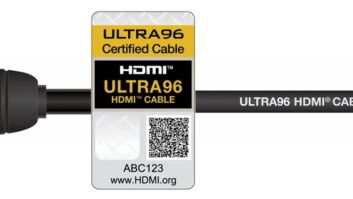
The Ultra96 HDMI Cable is part of a rigorous certification program. Each model must pass testing at an HDMI Forum Authorized Testing Center, and every length is tested and certified on its own. Each certified package is required to display the official Ultra96 HDMI® Cable Certification Label, which can be scanned to confirm the brand, model, and length on hdmi.org.
Related: HDMI Technology Delivers Hi-Res Distributed Audio for Commercial and Residential Consumers
Build Systems That Last
Purchasing displays, AV receivers, switchers, sources, and extenders from licensed HDMI Adopters and authorized resellers helps ensure each product has been tested, certified, and verified as compliant with the HDMI Specification. That reduces interoperability problems and the costly service calls that follow. And by specifying certified Ultra96 HDMI Cables and HDMI 2.2 technology-ready infrastructure, integrators can deliver gaming systems that satisfy clients now and keep performing for years to come.
For more information, visit www.hdmi.org.
The terms HDMI, HDMI High-Definition Multimedia Interface, HDMI Trade Dress and the HDMI Logos are trademarks or registered trademarks of HDMI Licensing Administrator, Inc.