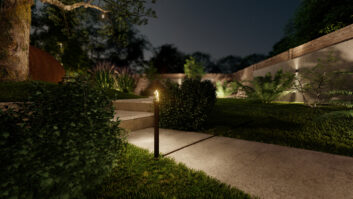
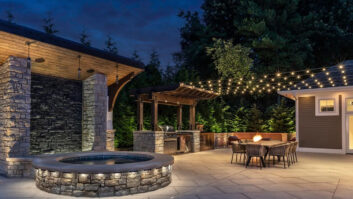
When you get into the outdoor space, audio and lighting together create a wonderful ambiance for people to enjoy at any time of day and night. It produces a magical, warm, and inviting space — it’s elegantly lit, cozy, and very nice to sit in. That’s why it has become so popular, but how do you capitalize on selling more of it? And how do you sell the six-figure jobs that are out there?

There’s tremendous potential in landscape lighting, and it’s a good money generator, but there are also many struggles. For one thing, landscape lighting — and lighting in general — has its own vocabulary. It can be daunting for some people to try and get into this space. Additionally, some integrators are afraid of the technical questions they are going to get. Most people want to know that you are an expert, and getting into a place with a client who may know more than you is not a good look for your company. And what if you choose the wrong products? That becomes a service nightmare. Poor design is yet another danger.
However, despite all the challenges, I encourage everybody to get involved because the world of lighting is so much fun. It is amazing the spaces we can create with moods and emotions.
So, let’s help you overcome any objections.
The Four Phases in Lighting Sales and Design
Several manufacturers offer free landscape lighting design services where you send them a picture and the plan, and they come back with a wire diagram that looks professional. You put the numbers together and present them, but one of the problems with these services is that we don’t necessarily know if that’s exactly what the client wanted. There may be some subverted expectations, and there may be a lot of back and forth. We’re finding that companies in the AV space are providing quotes, and they’re going nowhere because there are a lot of question marks about what was presented.
Related: Total Yard Takeover
If you want to elevate to the next level, you must stop thinking like a contractor and instead think like a designer. It’s going to take some knowledge and understanding, but you will get bigger sales when you do it.
When you’re putting a six-figure design together, people want to know what they’re getting for their money. To begin winning the big projects, you have to understand the four phases in the lighting sales and design process: Schematic Design, Design Development, Construction Documents, and Construction Administration.
- The Schematic Design process is where you build a rapport with the client if you don’t already have one. You have to build trust. Instead of an adversary, they see you as a partner — like they view their interior designer. This is the most important part of the entire process, where you ask questions to find out exactly what the client needs and how they plan to use the space.
- Phase two, Design Development, is where you’re taking all your designs and putting them on paper. This phase is about concept validation, product selection, scope definition, and budget refinement. You’re taking the concepts from phase one, and you’re putting them into fixture schematics.
- Phase three is Construction Documents, which involves finalizing the concept and defining all the products and installation details. This is where the installation proposals are prepared and delivered.
- The final phase is Construction Administration — the actual installation. This phase also includes adjustments — you are going back at night, right? — and the client handoff.
Those are the four steps, but most everybody that’s doing lighting in the AV channel right now is skipping phase one, which is a huge mistake.
Phase One: The Most Critical Step
The Schematic Design process is about deeply exploring lighting concepts with the client, where you establish the luminous compositions and visual hierarchy. To help visualize, you should create mood board renderings to explore different styles. From there, you determine client preferences and refine the style of what you are suggesting.

Schematic Design is also about understanding the scope of the project and uncovering the core reasons your prospect wants or needs lighting for their home and property. You need to establish a “want hierarchy” where the prospect prioritizes what lighting needs are most important to them. Using that information, if you have to phase the project, you can start with the areas that are most important to them.
This is also the phase where you explore and document site conditions. Every site provides unique views and opportunities for lighting, and you must walk a site to get a sense of the space. Pre-visualizing the site with your “night-eyes” helps to best understand how to work with the current site assets.
Ultimately, everything done during this stage leads to building trust and establishing a rapport with the prospect. It is also where you demonstrate your expertise by showcasing relevant projects to help them build confidence in you. Finally, but most importantly, Schematic Design lets them see that you are listening to them. Clients respond well when they know they are heard and know that you are on their side, finding the best solutions for them.
How to Get Started
If you want to go deeper into lighting, there are a few ways you can get past the language barrier, gain process knowledge, build your visual asset calendar, and attain your technical understanding. There are a lot of organizations you can get involved in to learn about outdoor lighting. There are also really good mentors out there who will help teach you, or you can do on-the-job training. All these take a bit of time, but you can get yourself into it.
A quicker path would be to partner with an outdoor lighting design company, which would give you instant expertise. At Lighthouse Design Studio, we’re looking to partner with custom integration companies that want a service that can do everything for them — from sales, design, installation, maintenance, and long-term care for their clients — and still make them some money. Or, if you’ve got teams that want to install, we do the design and help choose the products.
The most effective way to use us, however, is on the full side of our experience — we’ve got more than 100 years of it within our teams. We’ve done 50,000 projects since 2001. We bring a lot of assets, expertise, and value to your clients.
We’re product agnostic, so we can use pretty much anything. If you like Coastal Source, WAC, or Lumien, it doesn’t matter. There’s good stuff in all those lines, and we can use them. And we’ve got 22 offices in the Eastern U.S., but we’ve got travel teams that cover the country as well.
For more information about Lighthouse Design Studio and to get in touch with the company, visit https://lights.design/.
Lighthouse Design Studio at CEDIA Expo
Lighthouse Design Studio will be at the 2025 CEDIA Expo (booth #4143), where integrators can learn how the company can partner with their businesses to boost project value and recurring revenue. Additionally, Lighthouse executive director Tim Ryan is conducting three one-hour CEU-accredited courses:
September 4
- “The Language of Light,” 10:30-11:30 AM (MH 3A)
- “Lighting the Way: The Critical 5 of Landscape Lighting Design,” 3-4:00 PM (401)
September 5
- “The Critical 5 of Landscape Lighting Installation,” 2:30 – 3:30 PM (401)
Also on September 5, Ryan will participate in a one-hour panel “Smart Outdoor Living: Integrating Technology for Enhanced Experiences” 1-2:00 PM (401)