Custom integrators routinely collaborate with architects, interior designers, and builders — partnerships that often improve both project outcomes and profitability. But beyond collaboration, integrators can also borrow valuable perspectives from adjacent trades.
Lighting design is a prime example.
While the surge in indoor lighting solutions has created new opportunities for the CI channel, many dealers still find lighting challenging. Outdoor lighting raises the complexity further, requiring careful consideration of fixture types, placement, beam spread, color temperature, intensity, and environmental conditions.
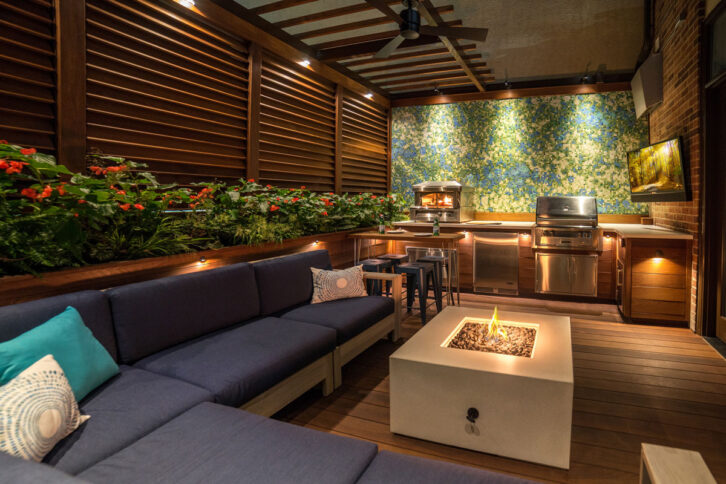
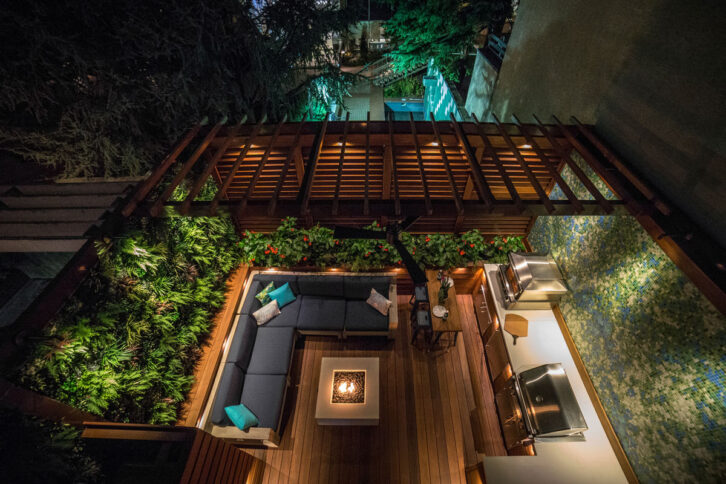
During a recent Coastal Source webcast, Joe Palimeno, owner of New Jersey-based landscape design/build firm Ledden Palimeno Design, shared insights from a project that transformed a compact — roughly 250-square-foot — urban outdoor space into a luxurious retreat.
Despite its modest footprint, the design incorporated an Ipe wood deck, louvered slat wall, Vistafolia artificial green wall, mosaic tile feature wall, pergola ceiling with fan, L-shaped seating, flower bed, pizza oven, grill, refrigerator, fire pit, dining area, and integrated audio and video.
The standout element: a thoughtfully layered lighting scheme that unified the space and elevated its visual impact.
For integrators, the project underscores several lessons worth applying to future outdoor designs.
Observe First, Design Second
Just as dedicated home theaters often reflect a homeowner’s passions and aesthetic preferences, outdoor environments should align with how clients live and what inspires them. That requires more than a cursory walkthrough.
For this Philadelphia row house project, Palimeno looked beyond the home’s architecture. “A lot of times you take cues from the architecture,” he explains. “That wasn’t the case here. The inspiration came from understanding her love of travel and her appreciation for luxury hotels and resorts.”
The result was an outdoor space that evokes the atmosphere of a boutique retreat rather than a typical backyard. For integrators, the takeaway is clear: deeper discovery leads to more personalized — and more compelling — designs.
Plan With Precision and Purpose
Outdoor lighting design is inherently detailed. It’s one reason manufacturers such as Coastal Source offer design support services to dealers. For design/build firms like Ledden Palimeno, the planning phase is both extensive and billable.
This project required addressing drainage, structural reinforcement, wall modifications, excavation for added height, and the integration of plumbing, irrigation, gas lines, and line voltage for ceiling and wall elements.
“If you’re entering a design/build project, you have to charge for the design,” Palimeno says. “You’re investing significant time to ensure everything is right — sometimes down to the inch.”
Integrators can apply the same discipline. Charging for design time not only protects margins but also reinforces the value of expertise.
Layer Lighting for Impact
Palimeno notes that five different clients could yield five entirely different designs for the same space. One constant, however, would remain: the importance of lighting.
Rather than relying on basic overhead floods, the design employed multiple fixture types to create depth, drama, and functional illumination. The scheme incorporated three Coastal Source fixtures: Niche Director lights, Nose lights for downlighting, and Niche 90-degree marker lights for subtle accent and task lighting.
The downlighting enhanced the green wall and mosaic feature wall while producing dramatic shadow effects. Marker lights under counters and planter overhangs added balance and visual continuity.
“The versatility and quality of the lighting just fit,” Palimeno says. “We used warm 2700K so the color temperature stayed consistent. Even spacing created depth and visual harmony.”
For integrators, the lesson mirrors audio system design: layered solutions deliver superior results.
Where Integrators Gain an Edge
Thoughtful outdoor lighting is not simply about visibility. It is about shaping mood, guiding movement, highlighting architecture, and enhancing usability after dark.
Related: Navigating the Landscape
Lighting designers instinctively approach projects with patience, restraint, and a layered visual strategy. Integrators who adopt that mindset can reposition outdoor lighting from a product sale to a design-driven service.
The payoff extends beyond aesthetics. Stronger visual outcomes lead to higher client satisfaction, increased perceived value, and improved margins. In a competitive market, integrators who think like lighting designers won’t just illuminate outdoor spaces — they’ll elevate their entire offering.