Josh.ai has published a Code of Conduct for AI in the Home. Available now, the set of 12 principles and supporting architecture defines how AI should behave in modern living spaces. As public awareness increases about the power and increasingly autonomous role of AI, the code establishes clear rules of the road for companies deploying AI while ensuring clients are in control of their personal property.
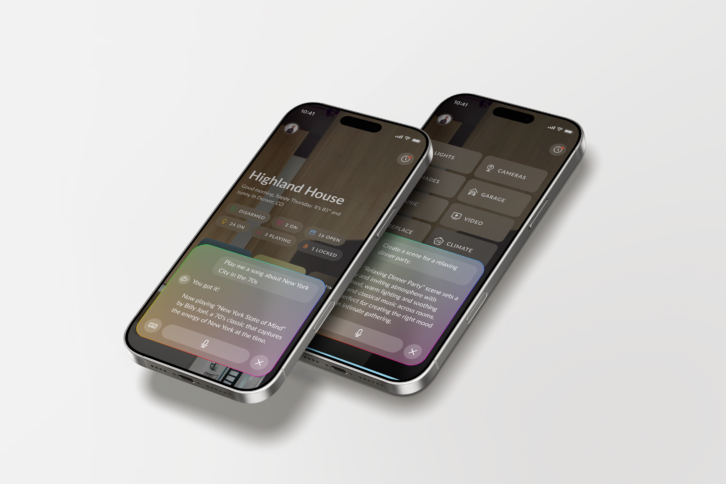
The home is unlike any other environment for AI. It is a personal domain that is meant to be shared among family and friends. Connected devices provide security, resource management, convenience, and entertainment control. An assistant that answers a question is one thing, but a system that can act and orchestrate the physical world is another. Josh.ai’s proposed Code of Conduct is built to ensure that as AI becomes more capable, it remains predictable, explainable, reversible, private, and, above all, under human control.
Central to the code are 12 rules and a Home Authority Stack that outlines how permission flows through a household with AI never controlling the home directly. Instead, the control system orchestrates the property’s permissions and decides whether any action is allowed before it reaches a device. It is a design Josh.ai argues is essential to safety, and one that distinguishes a true control system from a general-purpose assistant.
“The most powerful technology of our time is moving into the most personal place we have,” says Alex Capecelatro, CEO of Josh.ai. “People are right to ask what happens when AI can unlock a door or watch a camera in their home, and our answer is simple: The intelligence in a home must always answer to the people who live there. We are publishing these principles to hold ourselves to them first, and to provide the entire industry with a clear standard to build toward.”
Rules of the Road for AI in the Home
The code translates a broad body of work on AI safety, ethics, and device security into the specific context of the connected home. Its 12 rules require that authorized users can always interrupt or switch the AI off without friction, that every action can be explained and undone, that consequential actions carry a higher bar for confirmation, and that privacy and security are defaults rather than options. Together, the rules answer a single question at the heart of the document: Who is in charge here? The answer, in every case, needs to be the homeowner.
Central to Josh.ai’s approach is a clear separation between intelligence and authority. The AI reasons and suggests, but it cannot operate a device on its own. Every request passes through the control system, which validates it against the household’s permissions before facilitating any action. Since Josh.ai is uniquely built as the home’s AI and its control system, the home’s intelligence always answers to the overarching control platform that follows the homeowner’s rules. Josh.ai believes this approach of checks and balances should become the standard for AI in the home.
Preparing for a More Capable Future
The code also addresses the growing worry that AI could one day improve itself beyond meaningful human oversight. Josh.ai’s position is that the answer is not to slow potential benefit, but to engineer the boundaries as deliberately as the intelligence itself. However capable an AI model becomes, it still needs to answer to the control system orchestrating it with the same permission layers and a physical off switch. While capability can grow without limit, authority must not.
Josh.ai is publishing its code as a voluntary standard, an invitation, and not a finished rulebook. The company is encouraging platform makers, device manufacturers, professional installers, and homeowners to adopt and strengthen it. In doing so, Josh.ai welcomes the opportunity to work with policymakers as regulation of AI takes shape.
For homeowners, the code is a commitment that the intelligence entering their homes will remain helpful, private, and fully under their control. For the industry, it is a marker of where Josh.ai believes AI in the home must go, and a call to action to get there together.
Read the Josh.ai Code of Conduct at josh.ai/ai.