While smart home technology has made tremendous strides, homeowners constantly run into practical physical barriers when trying to link their smart home processor/hub with high-fidelity sound systems and audio equipment located throughout a home.
Consider a common scenario: A smart home processor/hub sits tucked away in a basement utility rack, network closet, or under a desk in a home office. Meanwhile, the sound systems that homeowners listen to are scattered throughout a home: a high-end stereo system in the living room, a receiver in the den, or possibly an amplifier driving patio speakers. Smart home owners face everyday frustrations when trying to make these audio systems work seamlessly together:
- Streaming Content to Premium “Dumb” Stereos: A homeowner might have a great tube amplifier or vintage receiver that sounds fantastic, but lacks built-in wireless or smart features. Replacing a high-end audio system that sounds great, just to get modern streaming capabilities, is expensive and wasteful. However, adding modern streaming capabilities to these systems often requires a homeowner to add proprietary streaming boxes that rely on outside cloud servers and don’t integrate cleanly with the system running the smart home.
- Multi-Room Echoes and Delay: Homeowners want to play the same content in multiple zones during parties or when they are performing tasks that require them to move between different areas of their home. Mixing wireless speakers or cloud-based streamers from different manufacturers often leads to annoying echoes where sound in one room is slightly behind another.
- Whole-House Announcements: Playing voice notifications through speakers in a home is a valuable feature of a smart home. “Garage door is open” and “front door is unlocked” are just two examples. But running audio cables from a smart home processor/hub to audio systems around a home is a very expensive solution for playing notifications through high-quality speakers so they are easily heard and understood. As a result, many people settle for quiet, tinny alerts from small smart speakers placed right next to thousands of dollars of great audio equipment.
This same physical distance between a centralized smart home processor/hub and the rest of the house creates other problems:
- Weak Radio Signals and Dead Zones: Smart home protocols, like Z-Wave, use USB radio sticks plugged directly into the main hub. When that hub is hidden inside a metal rack or in a far corner of the basement, Z-Wave door locks or window shades on an upper floor or back patio can struggle to get a reliable signal.
- Limited Bluetooth Range: Bluetooth Low Energy tracking for smart locks, plant sensors, and room-presence sensors has a short range. A single hub in one room cannot reliably pick up Bluetooth sensors throughout a multi-story home.
- Controlling Older AV Equipment: Many classic AV receivers, projectors, and motorized screens rely on serial connections (RS-232) for reliable wired control. Sending commands to these devices requires a network-to-serial converter sitting right beside the equipment.
The Home Assistant Connect AUX-2 was developed by Nabu Casa to solve these physical barriers by acting as a versatile remote network endpoint and as a high-performance network audio streamer.
Nabu Casa
Nabu Casa was founded by Paulus Schoutsen (the creator of Home Assistant) and Pascal Vizeli to provide commercial support and infrastructure for the open-source Home Assistant ecosystem. The company is best known for powering Home Assistant Cloud, which enables secure remote access, simple voice assistant integrations, and automated backups. Beyond cloud services, Nabu Casa plays a critical role in funding full-time core development for Home Assistant, ESPHome, and official hardware accessories designed to expand what your smart home can do.
Home Assistant Connect AUX-2
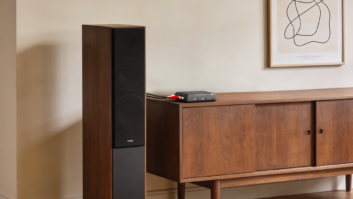
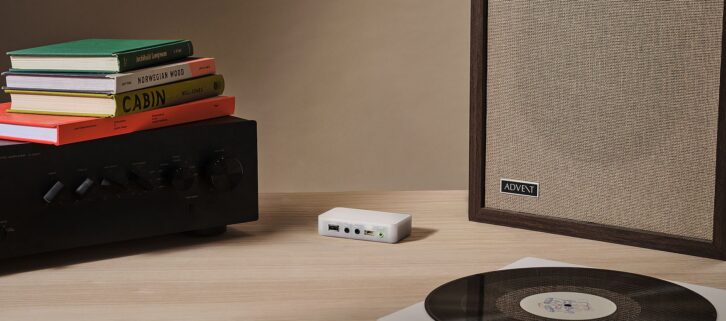
The AUX-2 excels at bringing high-quality, low-latency local audio directly to analog sound systems in a home. It is equipped with dedicated audio outputs and converts legacy amplification gear into modern, synchronized smart audio endpoints managed entirely within Home Assistant.
Streaming relies on two software components:
- Sendspin Protocol: Backed by the Open Home Foundation, Sendspin is an open, local-first streaming and synchronization protocol. Unlike traditional streaming protocols that introduce latency or require proprietary vendor hardware, Sendspin delivers microsecond-level clock synchronization over Wi-Fi or Ethernet. Running natively on the AUX-2, Sendspin handles audio playback along with real-time track metadata and artwork rendering.
- Music Assistant Integration: Music Assistant aggregates streaming providers (such as Spotify, Tidal, Apple Music, and Internet radio) and local media libraries into a single interface. Music Assistant handles library management, playback queues, and routes raw audio streams directly across a home’s local network via Sendspin to the Connect AUX-2. The AUX-2 then outputs clean analog audio directly to a stereo amplifier or AV receiver to deliver synchronized multi-room audio with no dependency on the cloud.
Additional features and functions of the Home Assistant Connect AUX-2 include:
- Remote Z-Wave Extension: By plugging a Z-Wave radio adapter (such as the Nabu Casa Connect ZWA-2) into the USB-A port of the AUX-2, it can extend a Z-Wave mesh network to distant areas of a home. Home Assistant automatically discovers the adapter over the network, and because the network configuration data lives on the USB radio adapter itself, rather than the AUX-2, hardware can be easily relocated or swapped.
- Bluetooth Proxying: The device can function as a remote Bluetooth proxy, allowing Home Assistant to reliably track Bluetooth Low Energy beacons, sensors, and devices far beyond the physical reach of the Home Assistant hub.
- Serial (RS-232) and Legacy Control: With two RS-232 serial ports, the AUX-2 bridges legacy equipment, such as TVs, projectors, and home theater receivers, to Home Assistant so they can be controlled through automations. Some of the equipment that the AUX-2 already supports includes AV receivers from Denon, NAD, and Marantz, BenQ projectors, and TVs from LG and Samsung.
- Flexible Power and Networking: To ensure uninterrupted, high-bandwidth audio streaming and stable radio links, the AUX-2 supports reliable wired connections via Ethernet. This includes Power over Ethernet (PoE) support for clean, single-cable installations.
The Value for Integrators
For professional smart home integrators, the Home Assistant Connect AUX-2 solves real-world deployment challenges on projects. Custom integrators design around professional automation platforms including Crestron, Control4, and Savant. However, clients frequently request niche consumer devices and IoT devices that professional control processors don’t support out of the box. By leveraging dedicated custom drivers that bridge Home Assistant hubs directly with Crestron and Control4, integrators can use Home Assistant as a versatile integration gateway. The AUX-2 elevates this strategy by acting as a reliable, PoE-powered audio streaming solution that can be deployed at a client’s audio rack, entertainment center, or any location with powered speakers. All this for a fraction of the cost of a professional smart home manufacturer’s audio streaming solution.
For more information, visit https://nabucasa.github.io/public-product-testing-resources/aux-2-52v8mj/.