Lighting design is no longer just about illumination. It’s a key ingredient in shaping how people live, work, and feel in their homes. As lighting becomes more dynamic, digital, and design-driven, smart home integrators have a unique opportunity: to partner with the design-build community not just as installers, but as collaborators in crafting unforgettable spaces.
But with that opportunity comes a challenge: Many interior designers, builders, and even clients still operate with outdated assumptions about lighting. When missteps occur, they can lead to glare-filled rooms, clunky controls, or even costly rework. To help integrators strengthen partnerships and streamline project outcomes, we’ve compiled essential “do’s and don’ts” drawn from the experience of DMF Lighting’s design experts.
DO: Get Involved Early
Lighting is not a last-minute decision. In fact, waiting too long to bring in a lighting designer is one of the most common mistakes in high-end residential projects. Decisions about fixture placement, wiring paths, and control zones need to be made during the schematic design phase.
Pro tip: Position yourself as a design partner from day one. Being part of initial design meetings enables you to align technology with the aesthetic vision and avoid costly compromises later on.
Also by Mike Libman: Starting With Retrofit Lighting
DON’T: Assume the Ceiling Plan Tells the Whole Story
Designers often assume a basic ceiling layout is enough to create a lighting plan. But without a full understanding of furniture placement, finishes, and spatial flow, lighting decisions can feel disconnected and disjointed.
Solution: Ask for detailed furniture layouts, art layouts, and renderings. Tools like DMF’s Lighting Application Services can help visualize how lighting interacts with elements in the home and creates moods and experiences that change based on use and time of day.
DO: Layer the Light
The days of relying on a single overhead source are long gone. Layered lighting, with ambient, task, and accent, is essential for spaces that serve multiple functions throughout the day.
Strategy: Help designers build scenes that shift with time and activity. Whether it’s a kitchen that becomes an entertaining space or a bedroom that doubles as an office, layered lighting with automation gives homeowners flexibility without compromising design intent.
DON’T: Overload the Room With Light
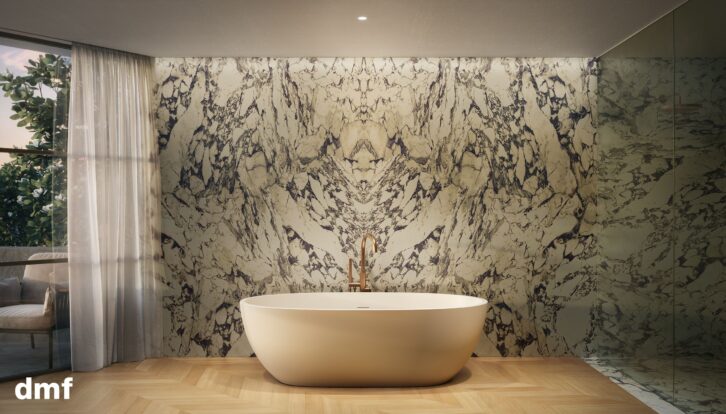
More light does not mean better lighting. Too much brightness can create glare, flatten textures, and reduce comfort. Contrast creates drama and draws the eye to important elements of the home.
Advice: Focus on quality over quantity. Choose fixtures with high color quality, appropriate beam spreads, and dimming down to 1% or even 0.1%. DMF’s adjustable modules, for example, give flexibility to highlight artwork or architectural details without adding bulky sconces or tracks.
DO: Speak the Designer’s Language
Lighting pros think in terms of circuitry, loads, and control systems. Designers think in terms of ambiance, texture, and visual rhythm. Miscommunication between the two can result in mismatched finishes, control confusion, and awkward compromises.
Bridge the gap: Use visuals — mockups, demos, and renderings — to create a shared vocabulary. When possible, walk the space together to define priorities and agree on goals for form and function.
DON’T: Underestimate the Role of Smart Lighting
Some designers are hesitant about integrating smart systems, fearing they’ll be complex or clash with the visual aesthetic. But with careful planning, smart lighting enhances both performance and beauty.
Educate: Show how features like scene control, scheduling, and circadian lighting can enhance the user experience and energy efficiency without compromising style.
DO: Treat Lighting as a Wellness Tool
Modern lighting impacts mood, sleep, productivity, and potentially long-term health. Systems that mimic the natural rhythm of daylight are becoming a must-have in luxury homes.
Actionable tip: Include digital tunable-white lighting solutions as part of your base recommendation. This positions the integrator as someone who’s not just enhancing beauty, but improving how clients feel in their space.
Also by Mike Libman: Embracing the Shift
Final Thought: Collaboration Is the Name of the Game
Lighting is no longer just the domain of fixtures and circuits; it’s a design element in its own right. When integrators and designers speak the same language, plan together early, and leverage partners like DMF, the results are spaces that shine in every sense of the word.
Mike Libman is the sales vice president, custom integrators for DMF Lighting who works with smart home technology professionals to provide lighting solutions to their clients. He believes lighting is about enhancing the elements that people love about their homes.
For more information, visit dmflighting.com.
Bridging the Gap Between Technology and Design
For integrators and designers alike, DMF Lighting offers a suite of resources and products that simplify collaboration and elevate outcomes. Whether working on a clean-lined contemporary project or a warm transitional home, DMF’s lighting solutions are engineered for flexibility, performance, and visual discretion.
- Design-Friendly Fixtures: Designers love DMF’s minimalist trims — especially the Artafex 2 round flangeless option — for its ability to disappear into the ceiling while delivering refined, focused light.
- Customization: DMF’s modular systems offer multiple beam spreads, color temperatures, and adjustable trims, allowing designers to shape light precisely around finishes, artwork, and architectural features.
- Samples: Integrators can access demo cases, trim samples, and renderings to help design teams visualize light quality and fixture options within the context of real spaces.
- Control Integration: DMF smart modules work with leading automation systems, enabling personalized scenes and schedules that meet today’s expectations for luxury, wellness, and user control.
- Support and Education: DMF actively supports integrators with technical documents, lighting layout tools, and personalized design consultations to ensure lighting aligns seamlessly with aesthetic goals.