Even for an industry veteran such as HTSA executive director Jon Robbins — who in 2026 marks his 50th year in the industry and 30th with the group — these have been interesting times. Here, following HTSA’s Spring Conference, Robbins offers his take on the state of the industry, why we need to work together, and the thought process behind the sale of Lightapalooza.
RESIDENTIAL SYSTEMS: What are your reflections on the current state of the economy and how it’s landing with your membership right now?
JON ROBBINS: I am honestly amazed. I recently held a session with my membership to take the pulse of the group. Despite the headlines, we are picking up right where we left off in 2025. According to our vendor partners, HTSA bucked the industry trend last year; we were up double digits in overall purchases.
So far in 2026, we are seeing the same momentum, and our members are reporting that they still have “full pipes.” Even though we are being very cautious and watching the economy closely, there hasn’t been a drop-off. It could be because our members are incredibly focused on the luxury segment, but overall, we’re hanging in there very nicely.
Focus is important, but outside influences can be unnerving. Was that anxiety present at the recent HTSA Spring Conference?
Not at all. I’ve been with this group for 30 years, and I’ve been in the business long enough to know that when there’s a downturn, you can feel it in the room. You can feel the energy shift. But the sentiment at this Spring Conference was extremely positive. There was nothing even remotely indicative of a downturn. When you get a room full of integrators together and they start comparing notes, the vibe is usually a very accurate barometer for the industry. The feedback was that business is maintaining and, in many cases, growing.
Historically, the first few months of the year — January through March — are the “softer” times for an integrator. Is that seasonality disappearing?
I don’t go by seasonality anymore. Our industry has become so cyclical that it really depends on when specific project phases land. It’s almost the “luck of the draw” regarding when a pre-wire cycle ends or a finish cycle begins. Because many of the projects our members handle now are multiyear endeavors, traditional seasonality doesn’t apply the way it used to. When a vendor is up or down in a certain month, my first reaction is to ask if it’s a cycle rather than a trend.
Looking at the various technology categories, are there any that seem more “bulletproof” than others right now?
Architectural lighting and networking are the big ones. When I say architectural lighting, I include “environmental lighting,” which means motorized shades — controlling the natural light coming into the residence. Those have been fairly bulletproof.
The beautiful part is that for the members who are more advanced in lighting, the legacy AV projects are following through as a result. We’re also seeing a massive amount of activity and buzz around large-panel LED displays and video walls. That category is becoming very interesting for the residential space.
This year’s Spring Conference included off-site visits to showrooms, which was a bit of a departure. What sparked that change?
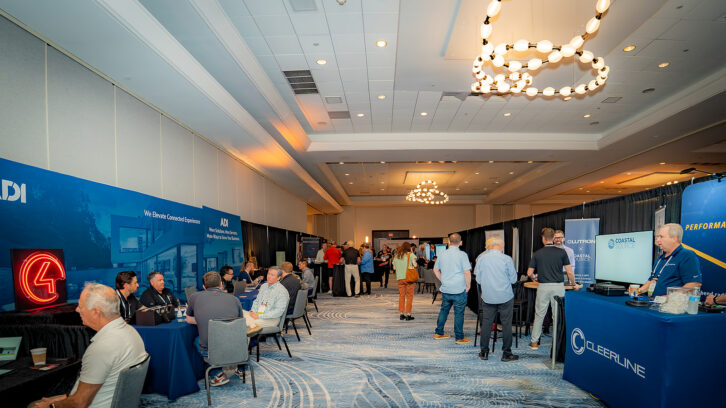
It was largely a matter of geography and the evolution of our vendor partners. This was our third time in Fort Lauderdale in six years. In that time, more vendors have established magnificent showrooms nearby, often in collaboration with one another.
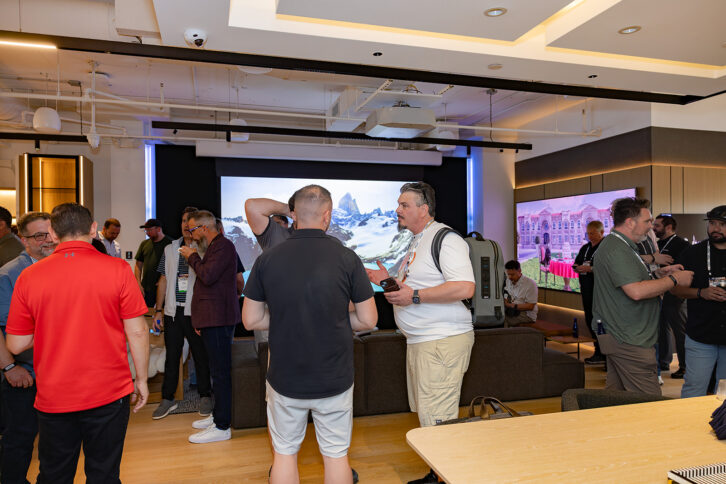
For instance, we were able to visit LK & Associates, a major rep in that market, whose showroom is just 12 minutes from the hotel. We also visited CinemaTech, where four or five other vendors were also represented. Crestron, JL Audio, and Just Video Walls all had off-site presences. We put hundreds of people through these locations. It gave members great exposure to new offerings in a real-world environment, and the vendors were thrilled with the engagement.
Did those off-site visits eat into your traditional one-on-one meeting times?
It didn’t. We kept a full day for one-on-ones and our “Vendorfest,” where partners set up 10-by-10 booths. We are always working on the model. We survey our members and vendors after every event and dissect the data as a team to see what works. It’s a constant work in progress.
Let’s talk about the big news: the sale of Lightapalooza to AVIXA. Was the goal always to sell the show?
It wasn’t always the plan, but it worked its way there. Lightapalooza was [HTSA Director, New Technology Initiatives] Tom Doherty’s brainchild. He’s done this before — he originally helped anchor CEDIA Expo on education. We used that same model, and the show grew through five iterations to upward of 1700 attendees this past year.
We reached a crossroads where we either had to add significant internal infrastructure to manage it or find a partner. We aren’t a trade show company; we are a peer-to-peer informational group. AVIXA, who we knew through ISE and InfoComm, are experts at running trade shows. As we talked over a six-month period, it became clear they fully understood our commitment to education. Part of the agreement is that the educational foundation remains, and HTSA will have input on carrying that forward.
AVIXA is primarily a commercial association. How was the transition to the residential side addressed?
That’s the beauty of it. AVIXA readily admitted what they didn’t know. They saw Lightapalooza as a way to better understand the residential channel. While some commercial integrators are moving into resimercial or design-build work, AVIXA recognized they didn’t have a deep foot in the residential community. This partnership bridges that gap.
Will the show change its focus?
No. It will remain a residential lighting show. Starting in June 2027 in Orlando, it will be collocated with InfoComm with its own discrete footprint. It will still be called Lightapalooza, the education will be attached, and it will look a lot like the previous shows, just with the added scale and professional management that AVIXA brings.
Is Lightapalooza a one-off, or could you see HTSA launching another cross-industry event?
This September marks my 50th anniversary in this industry. In all those years, I’ve never met a force like Tom Doherty. Nothing he does is a fluke. His mind is constantly working on how to improve this specific channel. I wouldn’t put anything past him. I love having him as a partner because he makes everyone around him better. So, you can never say “never.”
For the dealers out there who aren’t part of a group like HTSA and are struggling to navigate this climate, what’s your advice?
I would encourage anyone to do their homework on peer-to-peer groups — I do not like using the term buying groups. Whether it’s HTSA, the Guild, Cinergy, or others, there is immense value in best-practice sharing. It helps the entire channel. We’ve said it before, but a rising tide really does lift all boats. Lightapalooza proved that by opening up high-level education to the whole industry, not just our members.
Related: In Turbulent Times, It Pays to Be in a Buying Group
You’ve mentioned you’re hesitant to use the term “buying group.” It does feel a bit dated, doesn’t it?
It’s totally dated. That’s what we were in 1996, when the primary purpose was simply gaining more buying power. But the model has evolved, and I’m glad it has.
If you had to rename the category today, what would you call it?
Maybe “peer growth groups.” That’s what it’s really about now — growing together through shared knowledge and sophistication. Seeing that evolution over the last few decades has been pretty gratifying.