I’ve spent the first half of the year crisscrossing the country, dropping into showrooms, grabbing coffee at Azione, and swapping notes at ProSource. The conversations were as different as the cities, but one theme echoed everywhere: 2025 feels hazy. Economic headwinds are making every new hire feel like a leap of faith, so owners are asking a hard question: How do we grow without adding payroll?
The answer some of the most successful dealers have found is already on the org chart. When you tap an existing team member to become a “shade champion,” two good things happen at once. First, you unlock a high-margin category that is still underserved at many firms. Second, you give a talented employee a fresh runway just when repetitive rack builds are starting to feel like cookie-cutter tasks.
Several dealers told me their biggest challenge is not a lack of projects; it is keeping their best people excited enough to stay off LinkedIn. Handing someone the keys to an automated-shade program turns a potential slowdown into a professional-development sprint. Time that might have been lost to idle hours is suddenly spent on fabric demos, motorization training, and mock installs in the showroom.
Done right, that internal promotion does more than plug a revenue gap. It re-energizes the whole team. In a year when confidence is in short supply, an engaged staff selling a profitable product may be the most reliable growth plan you can bank on.
Where Design Fluency Meets New Dollars
Earlier this year, we released data from the Hunter Douglas Custom Integrator Program showing that roller and screen shades — the products every tech knows by heart — generate only about 39% of shading revenue. More than half the category’s dollars are still up for grabs, but only if a team knows how to quote, specify, install, and present these other styles to potential customers.
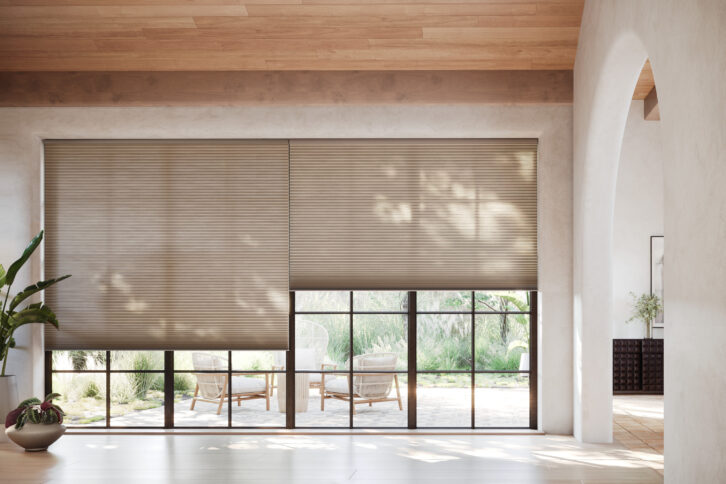
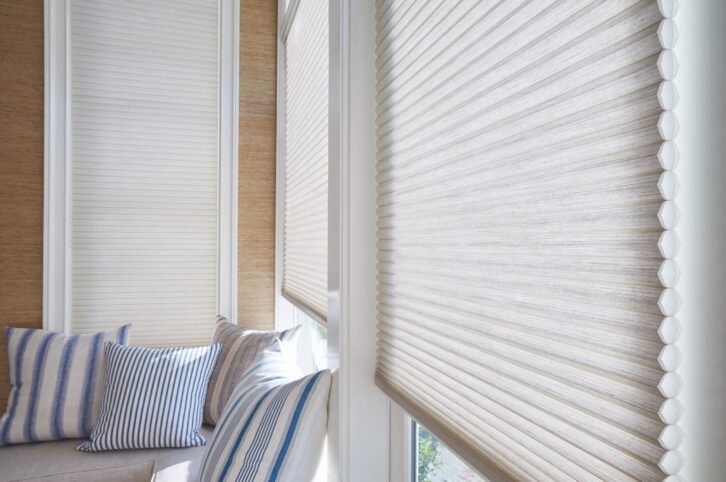
Dealers already act as application engineers, matching amplifiers to rooms, displays to sight lines, and bandwidth to streaming loads. Window treatments present the same puzzle. Sheer shadings tame glare on a 98-inch OLED without killing the view (and they carry a premium, generating 17% of shade revenue on just 10% of unit sales). Cellular honeycombs turn a drafty Denver loft into an energy-efficient nest that clients brag about to their friends.
Developing the Path for Your Shade Expert
Think of the journey less like onboarding and more like a well-paced apprenticeship, each phase short enough to maintain momentum and long enough to build real skill.
Month 0: Name the Mission — Pick the right person and give the role a headline such as “Shading & Daylighting Specialist.” A new title signals that this is a discipline, not busywork. During the first couple of weeks, your trainee shadows senior sales calls and walks every window in the showroom, noting which openings still need a demo shade and what product would be the best fit. The goal is simply to see and listen, gaining experience with fabrics, form factors, client questions, and installer pain points.
Months 1–2: Lay the Foundations — Next comes a concentrated burst of learning. Two or three paid hours a week are earmarked for manufacturer core courses covering terminology, shade design styles and applications, battery-versus-hard-wired motors, and control options. Back at the shop, the trainee reviews fabric books and practices measurements on every odd-shaped office window you can find. By the end of the second month, they can explain the difference between sheer, screen, cellular, and Roman as confidently as they already talk about HDMI versions.
Months 3–4: Apply Under Supervision — With the basics locked, the specialist begins quoting live projects alongside a mentor. Every discovery meeting includes at least one deliberate shade upsell. Sometimes it lands, sometimes it misses, but the repetition builds muscle memory. A small, low-risk retrofit — perhaps your own conference room — becomes their sandbox. They measure, order, schedule, and install while the mentor reviews proposals only for accuracy, not authorship. Living with that first automated shade, even if it is above the receptionist’s desk, turns specs on a screen into something tangible and memorable.
Month 5: Fly Solo, but Not Unchecked — By the fifth month, the shade champion is handling walkthroughs alone and generating multi-style proposals that include automation options, tax-credit language, and a simple ROI on energy savings. Your role shifts to spot-checking numbers and cheering from the sidelines. Introduce them to a measure-and-install network that will handle ladder work and let the new specialist focus on design and client care.
Month 6: Close, Review, Advance — At roughly the six-month mark, your specialist should have their first multi-room shade project secured: contracts signed, fabrics selected, shades ordered, and an install date on the calendar. Share the win with the team so everyone sees the momentum, then hold a structured review. Discuss what worked, where quoting or coordination slowed, and which advanced applications, such as skylights, exterior rollers, or drapery, will be next on the learning list. Record the key numbers — proposals issued, jobs closed, and gross margin — in whatever system you use to monitor sales performance, whether that is a spreadsheet, whiteboard, or project-management app. The goal is visibility and accountability, not reliance on a particular tool.
Sealing the Deal
All the training and new design fluency pay off only when the idea lands with the client, and that moment often happens through a laptop camera. Your freshly minted shade champion becomes the closer, weaving window treatments into a crowded Zoom the way a sommelier pairs a wine: fast, confident, and always tied to the main course. One question about afternoon glare, a 15-second clip of sheer shadings rescuing a cinema screen, and a clear good-better-best price band turns shades from an afterthought into the detail that makes the whole system sing. In a year when growth depends on doing more with the people you already have, their ability to tell that story in five minutes or less may prove to be the highest margin upgrade you add to the business.
If you’re ready to build a more tailored training path for your own shade specialist, feel free to reach out, and let’s design a program to help get your team member started.
Shade Study Guide: 10 Shading Terms to Get You Started
- IB/OB (Inside/Outside-Mount “Blind”) — Early spec sheets kept the legacy “B” for blind and simply prefixed it with I or O to note where the shade mounts. An IB install tucks the shade inside the jamb for a flush, minimalist reveal but accepts slim side gaps and demands tight tolerances. An OB install anchors to the wall or trim, letting fabric overlap the frame to virtually eliminate light leaks and hide out-of-square openings, with the trade-off of projecting slightly into the room.
- Light Gap — The sliver of daylight that sneaks in on each side of an inside-mounted shade. Pro Tip: Specify side channels or an outside mount when true room darkening is required.
- Openness Factor — For solar/screen fabrics, the percentage of weave that’s actually open (e.g., 1%, 3%, 10%). Lower numbers tame glare and heat; higher numbers keep the view.
- Top-Down/Bottom-Up — A dual-rail lift lets the shade drop from the top, rise from the bottom, or hover mid-window, flooding ceilings with daylight while shielding sightlines at eye level. Perfect for street-facing bedrooms and baths where privacy and natural light must coexist.
- Fascia vs. Cassette vs. Valance — All hide hardware, but fascia is metal, cassette is typically fabric-wrapped, and valance is a soft, decorative fabric box often matched to drapery.
- Pocket Install — A recessed aluminum “slot” embedded in the ceiling that lets the shade disappear completely when raised. Requires early coordination with the builder but yields millwork-level polish.
- Reverse Roll — Fabric unrolls off the front of the tube instead of the back. While this can create additional light gap, it’s useful for avoiding obstructions such as crank handles.
- Stack Height/Stack Back — The mass of fabric that remains visible when a Roman, cellular, or drapery panel is fully opened. Critical on short windows where every inch of daylight counts.
Master these terms and you’ll walk job sites speaking the same design language as architects and decorators — while still delivering the rock-solid automation your clients expect. —Maren Gehling