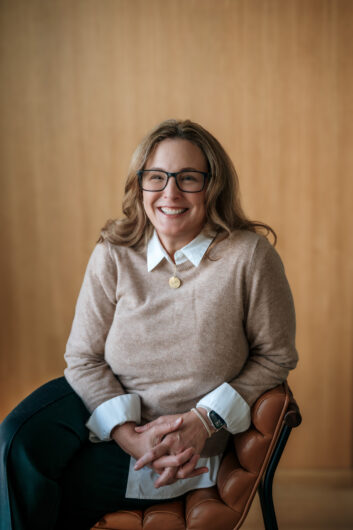
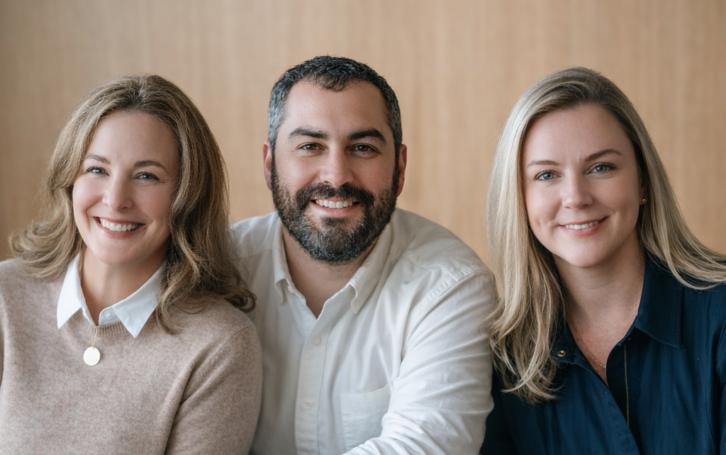
In theory, Caster Communications, a small, New England-based, boutique marketing and PR agency, would never be able to claim such high-powered consumer electronics heavyweights as Microsoft and Crestron as clients, yet that is exactly what it did — in addition to many other well-known brands. Its original secret of success was its founder and force-of-nature Kimberly (Kim) Lancaster, but now, after more than 28 years of leading the business, she has sold it to two trusted long-time employees — Alexandra (Alex) Crabb and Pete Girard — and is moving on to her next adventure.
We spoke with Kim about the earliest days of her business, her views on the changes in PR and marketing, the evolution of the transition plan, and what her future holds.
RESIDENTIAL SYSTEMS: When you first started the company, what were your hopes for it, and how did it evolve?
KIM LANCASTER: I thought it was just going to be a one-, two-, maybe three- or four-person shop eventually — just a small little specialty firm. I never saw it at that time becoming what it became. At our biggest, right before Covid, we had 14 employees.
In the beginning, I thought it was just going to be what a lot of agencies in the industry are: a couple of people doing really great work. I was 27 when I started Caster, and it was just me. I took out a loan and four credit cards that I maxed out to launch it. But I paid everything off by the end of the first year, including my student loans.
In the 2000s, we started getting really big accounts. When I landed Microsoft, I realized we were going to be bigger than I thought. Out of nowhere, it became pretty definitive that we were this specialty tech agency with deep chops in smart home, audio, and home theater. Mark Aling and I came up with “home theater in a box” out of Paradigm during a brainstorming session. With LifeWare we coined “dashboard to the home” and started migrating from the home of the future to smart home. Caster was first with digital, then online, press kits. We offered social programs before brands were sure about it. We never relied on one single market but had diversity across our clients. Those little things built what became Caster.
Was getting Microsoft the moment you realized you were not just surviving, but that this was something very real?
Yes. It was around 2005 — a little over five years in. That was when we realized we could pay the bills consistently. Up until that point, we had been profitable, even though in our worst year our profit was $14 — everybody got paid. Then we had LifeWare, Microsoft, MCIA, Runco, Paradigm — it was a who’s who list.
So, around 2007 it really became something, and then of course we had the real estate bubble and the market crash. But it was interesting because I have learned over the years that Caster is an absolute barometer of the industry. We’ve learned that the direct number of inbound requests for proposals and budgets hit us in a cycle that is very directly correlated to how the total real estate and building market is doing. So, you could see this pattern emerging — the cycle had started about six months before the crash of where things were going to be. And I’ve applied that in the 20 years since then and it helped us a lot for understanding what was in front of us and where we needed to diversify.
The consumer electronics industry is gigantic. How did you take a boutique agency and corner such a substantial part of it?
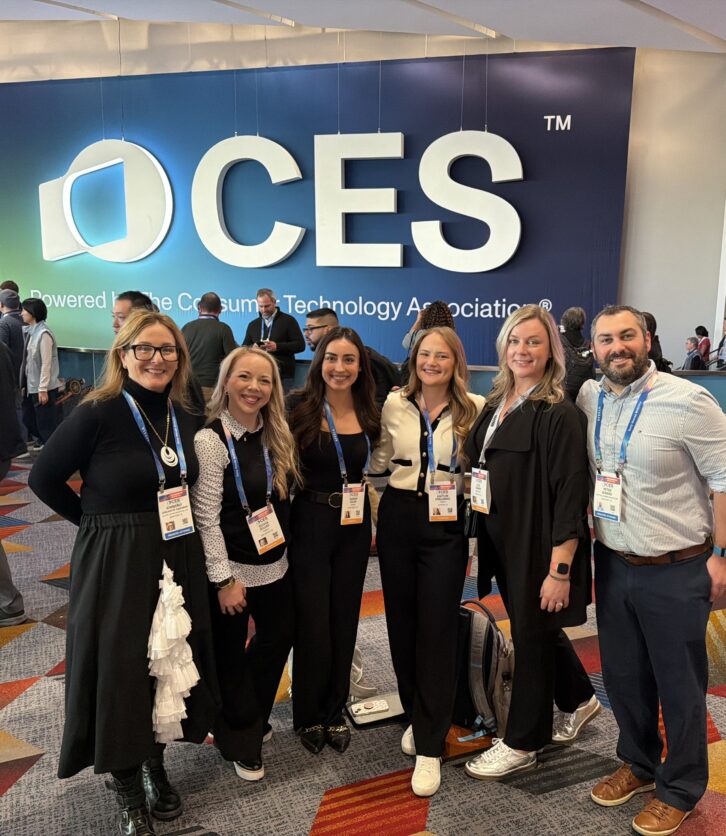
I’ve been going to CES since January 1994 and never missed one. CEDIA Expo used to be a launching ground for new technology for the home, where you’d see the first flat panels or hear the first 5.1 system. We became very good at taking luxury products and bringing in versions that talked to mainstream consumers.
We built long-term anchor relationships with both brands, integrators, associations, buying groups, and alliances. We had Paradigm for 14 years, along with Anthem and MartinLogan. In the early days we were jammed with top brands: TERK, SIM2, Krell, Vantage Lighting, Richard Gray’s, D-BOX, Kimber, and Runco through Sam’s sale, which was bought by Planar. We then added Control4 in 2009 and had them into 2020, which we then replaced with Crestron. Surgex was with Caster through 19 years; even as of today our clients stay with us: Powerhouse has been with Caster for 13 years, Z-Wave Alliance for 11, and KHRONOS for 10 years.
We weren’t just like, “Here’s this product review in the trades.” We understood their markets and their customers, and we knew their dealers. We were able to do crisis strategy, financial messaging, executive transitions, and help companies raise money or get acquired. Caster was one of the first agencies in the industry that took a company public.
We ended up managing 14 acquisitions (buying and selling), one IPO, and one SPAC IPO. That’s not typical in the trades, but we learned so much, and when companies were raising funds, had a plan for an offering, or needed that plus the specialty tech niche, they called us.
What is the single most chaotic crisis or fire you had to put out where you just had to trust your instincts?
It would have to be Kaleidescape, during the lawsuit with the DVD Copy Control Association over the wholesale copying of protected DVDs. That one was scary. News and legal coverage were coming in from every direction for a $40,000 product. Everyone in my office was bringing me cellphones saying, “I’ve got CNN, I’ve got CNBC, I’ve got The Wall Street Journal.” Managing statements, working with legal teams, and guiding the CEO and COO required a lot of skills really fast, but it set the standard for what Caster was able to do.
Not a crisis, but another cool thing we handled was the Innoventions exhibit in Disneyland, which was a Home of the Future that involved our clients Microsoft, LifeWare, and Niveus. There was so much messaging — national coverage, local coverage, trade coverage — and we managed the press all the way through.
What piece of old-school PR advice would you give that you won’t find in today’s algorithm-rich world?
Use the phone and meet with people face-to-face when you can. Post-Covid stripped so much face-to-face out. Everyone thinks you can do it on Zoom, but it’s not the same. There’s something to be said for having a cocktail or coffee and talking about regular things in addition to work, because that’s what builds human connections.
Young people coming in are often not invested in getting to know the person on the other side; they just want to pitch and get the next story. Relationships with press, association members, and client teams build networks where people take your call or media turn to you first when a story spot opens up. It isn’t enough to just email and text.
You have a knack for finding skilled people. What’s the secret behind your hiring process?
I have weird interview questions, like: Who is your best friend and why? Nobody preps for that question, but it’s one of the biggest tells because it gives you so much information about who a person surrounds themselves with.
We’ve also homegrown a lot of talent. Take Pete [Girard, now co-owner of Caster Communications] — he was a barista at a coffee shop I regularly went to. He went to the University of Rhode Island like me, and he had the foundations and the right personality. We spent years building each piece to mold him into the perfect PR person.
When hiring, I always think: What does six hours in an airport look like with this person? Can I survive it?
How did you know that Alex and Pete were the right people to take Caster to the next chapter?
Covid was the source of all truths. We had done things one way for 23 years, and then the world blew up. Alex and Pete had both been with me for a long time. We realized we didn’t need our 4500-square-foot office building anymore because we were operating virtually and doing it well, and so I sold it.
That kicked off the conversation of Alex indicating that she’d like to be in partnership. We began having conversations about what the future of Caster would look like. We had an evaluation of the company, and I talked to three external agencies about being acquired, but they wanted me to stay on for three to five years with 40 people reporting to me, which wasn’t what I wanted.
Alex and I even talked to an external group together to evaluate it, and in that process, it evolved to bringing in Pete because he is a strong anchor that we needed to keep involved. When you went through all the different factors, the idea of them doing it is what made sense. I’m 10 years older than Alex, and Alex is 10 years older than Pete. The timing made sense to give them a strong runway. So, we worked with the Small Business Association to arrange the sale to Alex and Pete.
We spent all of 2025 planning internal transitions before closing and then kept it quiet through CES so everyone felt secure. Alex has put her soul into this company for 14 years, and Pete was natural to take over my account side. The continuity was already built in.
Your Caster Comm website bio says your retirement plan consisted of sleeping for 14 hours and hitting a breakfast buffet. What does “retirement” actually look like for you?
I haven’t quite gotten my rhythm down yet. I’m sleeping later, cooking a lot, visiting local farms, and staying up late watching Red Sox games on the West Coast!
I’m looking for a 200-year-old farmhouse to restore. Over the years, I’ve built or remodeled 14 residential and commercial properties. I love sourcing old finds and the history of New England architecture.
I’m also sitting on the board for a Vermont food co-op, connecting local farmers to sales channels. I just helped with a local strawberry campaign for them — they wanted to sell 7500 quarts, and we blew right past their numbers!
What was the final piece of advice left on Alex and Pete’s desks?
Go meet with people. Kiss babies, shake hands, go out to dinner with everyone, and carry the Caster dinner legacy on!
Rapid-Fire Round
Favorite PR campaign from your Caster days? The Disneyland Innoventions Home of the Future opening with LifeWare, Microsoft, HP, and Niveus. That was a cool experience and hard to beat.
The campaign you wish you came up with? TiVo launch
Technology you’re happiest you never have to pitch again? Headphones
What wine was poured to celebrate your final day? Big Table Farm 2012 Pinot Noir. It was fantastic.