“While you can’t always choose your clients, you absolutely have the power to select your suppliers,” says Cody Crossland, vice president of sales and customer service, Blackwire. And with pressures from the current global conditions, such as tariffs and supply chain issues, choosing the right distributor is more important than ever.
“The biggest issue is ongoing component shortages from manufacturers,” says Crossland. “HDD inventory is completely depleted, and RAM availability is becoming increasingly limited. As these shortages continue, we expect product availability to tighten across many key product categories.”

At the same time, fluctuating raw material costs are causing manufacturers to implement sudden price increases with very little notice, he adds. “Unfortunately, this creates constant shifts in pricing and availability that require quick adjustments on our end to keep products moving and support our customers as effectively as possible.”
Cynthia Menna, ADI VP/GM, AV, says the company continues to navigate evolving tariff conditions and broader supply chain dynamics, both of which can impact product pricing, product availability, and project timelines. “Given the variability across the industry,” she says, “maintaining visibility and flexibility across the business remains a key focus.”
ADI works very closely with supplier partners through an integrated business planning approach, aligning demand signals, inventory positions, and production capacity to stay ahead of changes, she notes. “This level of coordination enables us to respond quickly to shifts in supply and demand across categories.
“Given ADI’s scale and broad supplier network, we are well positioned to support customers through these dynamics,” Menna continues. “Our demand planning team works with suppliers to monitor inventory levels, sourcing strategies, and production capacity, allowing us to adjust as needed, whether through increasing safety stock, expediting orders, or identifying alternative products when constraints arise. This approach helps ensure our customers can continue moving projects forward while maintaining quality and timelines.”
And while tariff pressures have begun to stabilize and potential rebates are even being discussed, the more persistent challenge for PowerHouse Alliance members this year has been the ripple effect of rising petroleum prices, says Dennis Holzer, PHA’s executive director.
“Petroleum costs aren’t just a transportation issue; they’re embedded in many of the products we distribute, including the copper wire and cable central to both residential and commercial systems installations,” he notes. “The cost pressure is quieter than the tariff headlines, but it runs deeper.
“Our members have responded by significantly increasing inventory levels and by purchasing and holding product in advance, so that when a dealer or integrator is ready to place an order, the product is there, at the price they were quoted. That kind of certainty matters enormously when the market is unpredictable. It’s also strengthened the trust relationship between our distributors and their integrator customers. Being able to say, ‘Your order is waiting for you, and the price hasn’t changed,’ is a powerful thing in this environment.”
Solutions to Today’s Challenges
“At ADI, we prioritize flexibility and proactive planning to help customers navigate tariff and supply chain dynamics,” Menna says. “We offer a diverse portfolio of more than 500,000 products from 1000 leading brands to give customers access to a broad range of solutions across various price points. We’re focused on strong collaboration across the channel with our customers and suppliers. We prioritize strong communication, transparency, and consistency. This approach has helped us strengthen our relationships with customers, increasingly viewing us as an extension of their team.”
At the same time, she adds, ADI continues to invest in training, technical support, and high-growth categories like residential AV, pro AV, and data communications, while enabling new recurring revenue opportunities through solutions such as OvrC for remote system management.

Blackwire has shifted its focus entirely toward protecting its dealers’ margins and keeping them informed, Crossland says. “On the back-end, we’ve deployed custom APIs with platforms like D-Tools, Portal, and WeQuote, so dealers are always quoting with accurate, real-time pricing and don’t get burned by sudden changes. We’re also working ahead with manufacturers to stockpile high-demand inventory before price hikes hit, and we’re holding off on raising our own prices until that older, lower-cost stock is completely gone. When stockouts or steep hikes do happen, our sales team actively steps in to help dealers pivot to solid alternative products so their projects stay on track.
“Communication has been Blackwire’s biggest tool,” he adds. “We’re over-communicating everything through aggressive email, phone, and social campaigns so nobody is caught off guard. If there’s a silver lining to all of this, it’s that this crisis has actually allowed us to prove how reliable we are. By shielding our dealers from the worst of the market volatility, we’ve built deeper trust and significantly stronger, more loyal partnerships.
“While market disruptions are never ideal,” Crossland explains, “they provide a valuable opportunity to evaluate your business with a fresh perspective. We specialize in tailoring our offerings to fit dealers’ specific projects. From expert system design to deep technical knowledge across all major platforms, we are uniquely positioned to help dealers find solid alternatives when they are faced with inventory shortages, eroding product quality, limited supply, or the margin loss that often comes with standard solutions.”
Choosing a Distributor
“If I could give integrators one piece of advice, it’s to partner with a distributor that actually knows what it’s like to be in your shoes,” Crossland says. “At Blackwire Designs, we are that partner. Founded by former installers, we understand firsthand how easily a supply chain hiccup can ruin a project’s profitability. Don’t just buy hardware; buy predictability. Our team knows the gear well enough to troubleshoot an entire system on a single call without bouncing you around. And you should partner with a distributor that actually seeks to understand your unique business model and tailors their offerings to fit your needs, rather than forcing you to bend your business to fit their rigid corporate structure.
“We vet every piece of gear before it ever hits the market, so you aren’t dealing with out-of-the-box failures,” he adds. “Plus, we offer free pre-configuration for networking and video over IP to turn complex setups into profitable, plug-and-play installs that save you massive time on-site. Finally, Blackwire is truly independent. Because we don’t answer to shareholders or corporate quotas, our loyalty stays exactly where it belongs, and that’s with you.”
“Choose a distributor that acts as a true partner, an extension of their team, not just a supplier,” Menna advises. “Look for strong product breadth, reliable inventory, transparent communication, and flexibility to adapt to market changes, alongside value-added support like technical expertise, training, and system design.”
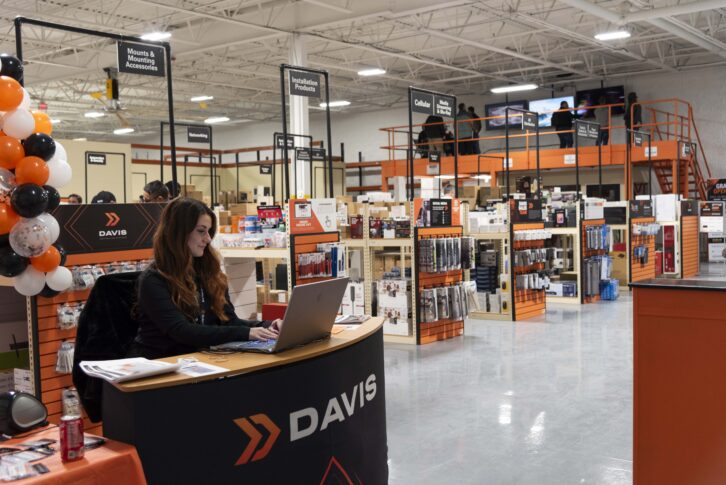
It’s also important to choose a partner that is easy to do business with, one that delivers consistent service, streamlined processes, and helps keep projects running smoothly, she adds. “At ADI, we’re focused on providing a ‘frictionless’ omnichannel customer experience. Whether it’s in one of our stores, online, or in our mobile app, customers can expect to have the same experience when shopping ADI. The right partner will also invest in tools and services, supporting every stage of a project while helping you grow your business and deliver exceptional customer experiences.”
Holzer advises looking beyond price. “Convenience, availability, product variety, and access to the name brands your customers expect; these are the practical criteria,” he says. “But also look at whether your distributor is genuinely invested in your local market. PowerHouse Alliance members live and work in the same communities as the integrators they serve. That proximity translates into faster response, better understanding of regional project demands, and a level of accountability you won’t get from a national warehouse operation. When things go sideways — and in this environment, they will — you want a distributor who picks up the phone because they know you, not because you’re a ticket number.”