Every industry faces a choice: pursue “good enough,” or strive for excellence. That choice begins with the brief. To some, it may look like a checklist, but in truth, the project brief is the first act of design — a foundation upon which excellence is built.
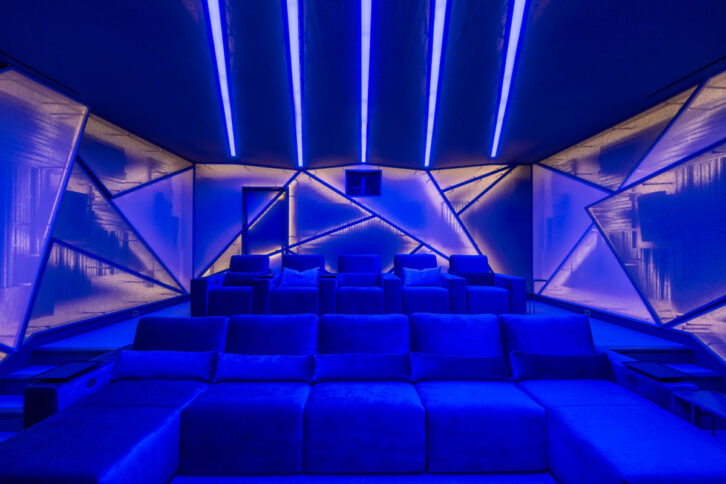
Private cinema has evolved. Decades ago, the field was split: some rooms were beautiful but poor performers, while others were acoustically accurate but otherwise uninspired, black boxes that no one wanted to linger in. Today, clients expect both. They want rooms that are technically exacting and aesthetically compelling. That is an objective that requires more than specifications, standards, and equipment lists; it requires a shared understanding of desires and possibilities best discovered, defined, and documented in a project brief.
What Belongs in a High-Value Brief?
- Objectives in the client’s words. A strong brief doesn’t start with specifications; it starts with the client. Ask questions like, What would success look like when we hand you the keys? One client once told me: “It would be a special place that draws my family together…and I’m willing to invest more to get that right.” That answer reframed the entire project. The brief we created from it ensured we weren’t simply delivering a theater, but a space of connection, built to a higher purpose.
- Experience definitions that translate into design requirements. We use plain language first, then map it to engineering. A client may say, “I want to catch every word at low volume,” or, “I don’t want to rely on captions,” or, “dark scenes should hold detail.” Those phrases may sound simple, but they imply a quiet noise floor, accurate acoustics, loudspeakers that resolve nuance at low levels yet perform cleanly at reference, and screens suiting the environment. A good brief makes those connections explicit.
- Primary seats and use patterns. Every room has compromises. A 24-seat theater may have only 12 true “prime” seats. That’s not a flaw; it’s reality. A well-written brief documents how many perfect seats are required and how many acceptable ones surround them. That clarity guides both budget and design, protecting client expectations.
Also by Sam Cavitt: The Two Types of Luxury
- Aesthetics integrated with performance. Today’s best private cinemas are both beautiful and accurate, but that balance doesn’t happen by accident. The brief should establish early that finishes, millwork, and lighting will be coordinated with acoustics, not bolted on afterward. When everyone signs on to that principle from the start, the results are consistently extraordinary.
- Standards as reference points, not ceilings. Industry guidelines such as RP-22 provide a valuable baseline. But the brief should state whether the goal is to meet or to exceed those standards. Clients don’t come to us for “average.” They want the extraordinary.
The Hidden Costs of Skipping the Brief
When the brief is ignored or treated as optional, problems multiply.
- Assumptions replace discovery. Without a thorough brief, projects default to assumptions or unclarified goals. This is how opportunities to delight are missed or how critical desires, like immersive music listening, get overlooked. Many clients don’t even realize that a well-designed private cinema can be the finest environment for 2-channel and immersive music, surpassing dedicated listening rooms. Without discovery and documentation, those opportunities remain hidden.
- Compromises go unpriced and unowned. Compromise is not a dirty word; it is part of every project. But when compromises aren’t made explicit, they become liabilities. If we trade a few decibels of sound pressure to meet a budget or reduce the number of prime seats to accommodate a design feature, those tradeoffs must be documented in the brief to be approved by the client and not buried in assumptions.
Intermediaries: Alignment by Design
Perhaps the greatest risk of all comes when we are not speaking directly with the client but through intermediaries. This could be a builder, an architect, or a client representative. Their intentions are often good, but their priorities are not always the client’s priorities.
One representative may define “best result” as saving the most money; another may see it as creating the greatest experience. Those are legitimate but very different objectives. If left unchecked, they can steer a project away from what the client actually wants.
The danger is twofold. First, opportunities to delight the client can be lost before they’re ever presented. If the representative filters the conversation, the client may never learn that their theater could also be the finest music-listening space in the home, or that acoustical design can elevate a room from functional to extraordinary. Second, compromises may be accepted on the client’s behalf without a full understanding of what is being given up. That is not fair to the client, and it is not safe for the design team.
This is why the brief is indispensable. It provides a written, agreed-upon record of the client’s actual objectives. It requires that decisions, especially compromises, be documented and routed back for client approval. That ensures alignment and preserves the integrity of the design mandate.
I have always said: Let the client make the final call. It’s their home, their investment, their experience. Yes, they are busy people, and representatives serve an important role in protecting their time. But the responsibility of the design team is to give the client the dignity of informed choice. The brief makes this possible by putting the conversation in writing, ensuring the client remains the ultimate authority, even if much of the day-to-day communication flows through others.
Without this safeguard, a private cinema project risks becoming a lowest-common-denominator exercise: serviceable, perhaps, but rarely extraordinary. With it, we can proceed in confidence, knowing we are working toward the client’s true vision, not a diluted interpretation.
From Mandate to Momentum
Once discovery is complete, the brief becomes a design mandate. It is not just notes; it is a professional commitment. In it, we present the client’s goals in their own words and outline how our design, engineering, and construction plan will deliver those goals. Only then do we proceed into engineering and coordination. At that point, everyone — client, representatives, and design team — shares the same understanding, documented and signed. That clarity gives the project momentum and prevents misunderstandings down the road.
State of the Industry
Zooming out, the value of the brief reflects the state of private cinema as a whole. As an industry, are we content to meet standards, tick boxes, and call it “good enough”? Or are we committed to pursuing excellence?
Also by Sam Cavitt: A Luxury Private Cinema State of Mind
Standards provide reference points, but they are not destinations. A room that meets “industry standards” may be technically correct, but will it inspire? The finest private cinemas exceed the minimums, setting new benchmarks for performance, design, and experience. That pursuit begins at the very first step: discovery, documentation, and the creation of a thoughtful brief.
Excellence by Design
Our clients are not interested in the average or the generic. They want theaters that delight, transport, and elevate. They are willing to invest when they understand the possibilities, and it is our responsibility to make those possibilities clear from the start.
High standards lift the entire industry. A rising tide, as they say, floats all boats. But standards don’t raise themselves. People raise them. The project brief is how we raise them: by respecting the client’s words, integrating beauty with performance, documenting compromises, and turning aspiration into achievement.
That is why the project brief must never be treated as paperwork. It is the first and most important act of design. It is, quite simply, excellence by design.